Door Replacement Near Me: Signs Your Exterior Door Is Costing You Comfort
A front door usually gives you small warnings before it becomes an obvious problem. You feel a thin line of hot air around the edge in August. The deadbolt needs a shoulder push before it catches. After a North Texas storm, the bottom corner looks swollen, or you can see daylight near the threshold when the door is closed.
That is when many homeowners start searching for door replacement near me and wondering whether they are being practical or premature. The point isn't age, it's whether the door, frame, threshold, seal, and hardware still work together as a tight, secure system.
We hear this question often from homeowners around North Texas, and here's how we answer it: drafts, cracked or warped door surfaces, a beaten-up appearance, poor energy performance, and security concerns are all valid reasons to look seriously at replacement. The right answer depends on what is failing, how often it comes back, and whether the existing opening can still support a dependable repair.
Drafts Are Usually a System Problem
A draft at an exterior door is not always dramatic. In Dallas-Fort Worth, it may show up as a warm edge near the foyer, a cold strip on the floor in January, dust gathering near the sweep, or one room that never feels as steady as the rest of the house.
We consider constant hot or cold drafts around the door a clear sign that it may be time to replace it. We install ProVia doors, selected for energy efficiency, security, durability, and appearance.
That single observation doesn't automatically settle the repair-or-replace decision, but it does tell you the issue isn't just cosmetic; it's comfort, air sealing, and possibly security.
Weatherstripping can wear out. A sweep can tear. A threshold can move. Those parts may be repairable when the door slab is straight, the frame is sound, and the lock still lines up cleanly. Replacement becomes more likely when the door itself is warped, the frame has shifted, the threshold is damaged, or repeated seal repairs stop holding.
Check for daylight around the closed door, especially at the top corner and latch side.
Feel for air movement around the perimeter on windy days.
Look for worn, flattened, torn, or missing weatherstripping.
Notice whether the room near the door is harder to cool or heat than nearby rooms.
Sticking, Swelling, and Hard Closing Mean Something Moved
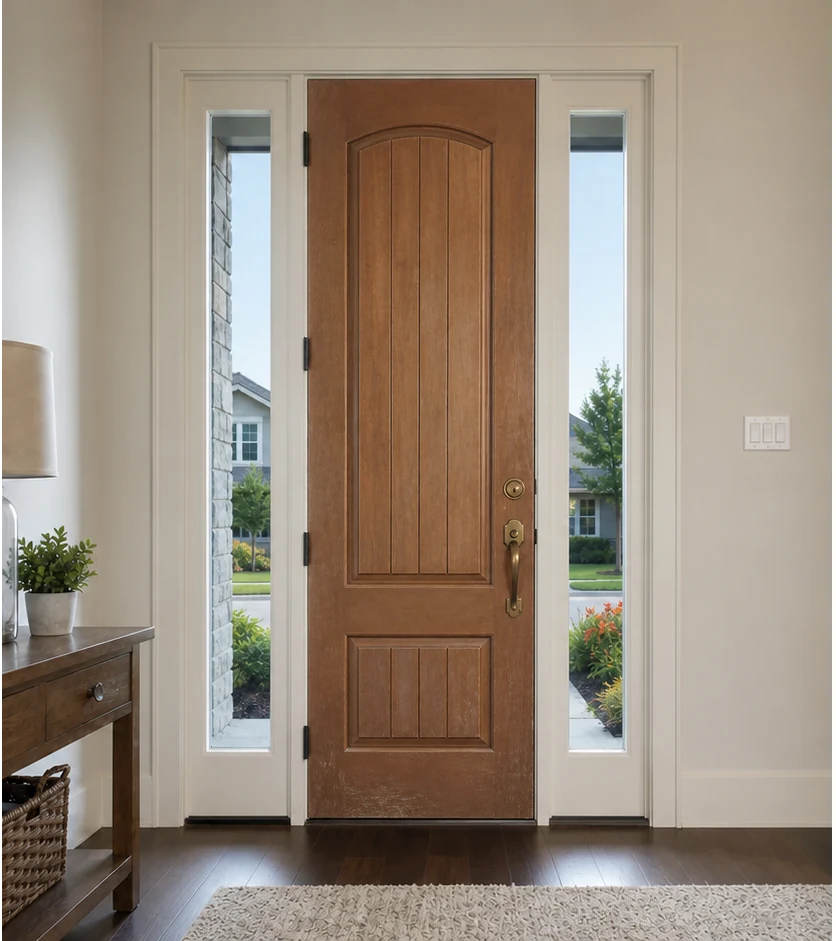
A door that sticks once after heavy rain may not be a crisis. A door that sticks every week is telling you the fit has changed. North Texas humidity, foundation movement, sun exposure, and years of use can all affect how the slab sits inside the frame.
When a front door becomes hard to close, homeowners often blame the lock first. Sometimes the hardware is the issue. Other times, the latch is missing the strike because the slab has bowed, the hinges are pulling, or the frame is no longer square.
The practical test is simple: the door should close without lifting, slamming, or pushing hard. The deadbolt should extend smoothly into the strike plate. The weatherstripping should compress evenly without forcing the door out of alignment.
We're direct about installation: a door needs to close snugly against the weatherstripping with no gaps, and improper installation can affect security, efficiency, and overall performance. If the existing opening cannot hold that alignment anymore, a new door system may be the cleaner long-term answer.
When Adjustment May Be Enough
Minor hinge tightening, latch adjustment, or weatherstrip replacement may solve a door that is otherwise square and solid. This is more likely when the problem is recent, isolated, and not paired with visible warping or frame damage.
When Replacement Deserves a Look
Replacement becomes more likely when the slab rubs in multiple places, the lock no longer lines up after adjustments, the threshold is compromised, or you see light and feel air even after the door is fully closed.
A Door Is More Than the Slab You See
When homeowners compare exterior door replacement options, they often start with style: glass, panel design, color, hardware, and whether the door should feel traditional or more modern. Those choices matter, but performance depends on the complete assembly.
The slab, frame, threshold, hinges, sweep, weatherstripping, lockset, strike plate, and installation all have to work together. A beautiful door installed into a poor fit can still leak air, drag at the floor, or leave the lock fighting the frame.
Our ProVia doors are foam-filled with thermally efficient material and designed to seal tightly. ProVia also describes features such as polyurethane cores, sweeps, weatherstripping, and threshold systems that help reduce air and water infiltration when the door is properly selected and installed.
For a homeowner, the practical takeaway is this: do not judge a replacement door by the slab alone. Ask how the full entry system will be measured, fitted, sealed, secured, and finished against your actual opening.
Energy Performance Comes Down to Fit, Glass, and Sealing
A drafty exterior door can raise energy use because conditioned air escapes and outdoor air gets pulled into the house. In DFW, that matters on both sides of the calendar: long cooling seasons, sudden cold fronts, and windy spring weather all expose weak seals.
ENERGY STAR explains that certified windows, doors, and skylights are made by an ENERGY STAR partner, independently tested and certified by the National Fenestration Rating Council, and rated to meet EPA energy-efficiency guidelines. For doors, the amount of glass in the product matters because a solid entry door performs differently than a glass-heavy patio door.
That does not mean every uncomfortable entry needs the same product. A north-facing solid front door in Coppell has different needs than a west-facing door with decorative glass in Frisco or a patio opening that catches afternoon sun in Fort Worth.
A good estimate should connect the product to the home. The conversation should cover the door's exposure, glass level, threshold condition, frame fit, insulation, weatherstripping, and whether the existing opening has movement or damage that must be corrected during installation.
Security Depends on the Door and the Opening
A new entry door can improve security, but only when the door system gives the lock and frame something solid to work with. The lock, jamb, hinges, strike area, reinforcement, and installation all matter.
We install ProVia doors with special security mechanisms and recommend a security plate built into the frame. That metal security plate in the jamb adds an extra layer of protection.
If the door is cracked, warped, hollow-feeling, loose at the hinges, or no longer lets the deadbolt extend fully, the security concern is practical. Hardware can only do so much when the surrounding structure is weak or misaligned.
During an exterior door replacement conversation, ask how the installer will handle the strike area, hinge-side support, shimming, fastening, threshold, and final lock operation. You want the door to look right, seal right, and close with the kind of solid feel you notice every day.
Repair or Replace: How to Make the Call
If you are searching for front door replacement near me because the door looks tired, start by separating appearance from performance. Faded paint, dated glass, and worn hardware may bother you every time you walk up, but the bigger decision comes from how the door behaves.
Should you repair weatherstripping or replace the door? Repair may make sense when the slab is straight, the frame is solid, the threshold is intact, and the only clear failure is a worn seal. Replacement deserves a serious look when drafts, sticking, daylight, swelling, surface damage, and lock problems show up together.
If you can feel air, see light, fight the deadbolt, and notice swelling after storms, that's your door telling you something. At that point, another small repair may buy time without fixing the real failure.
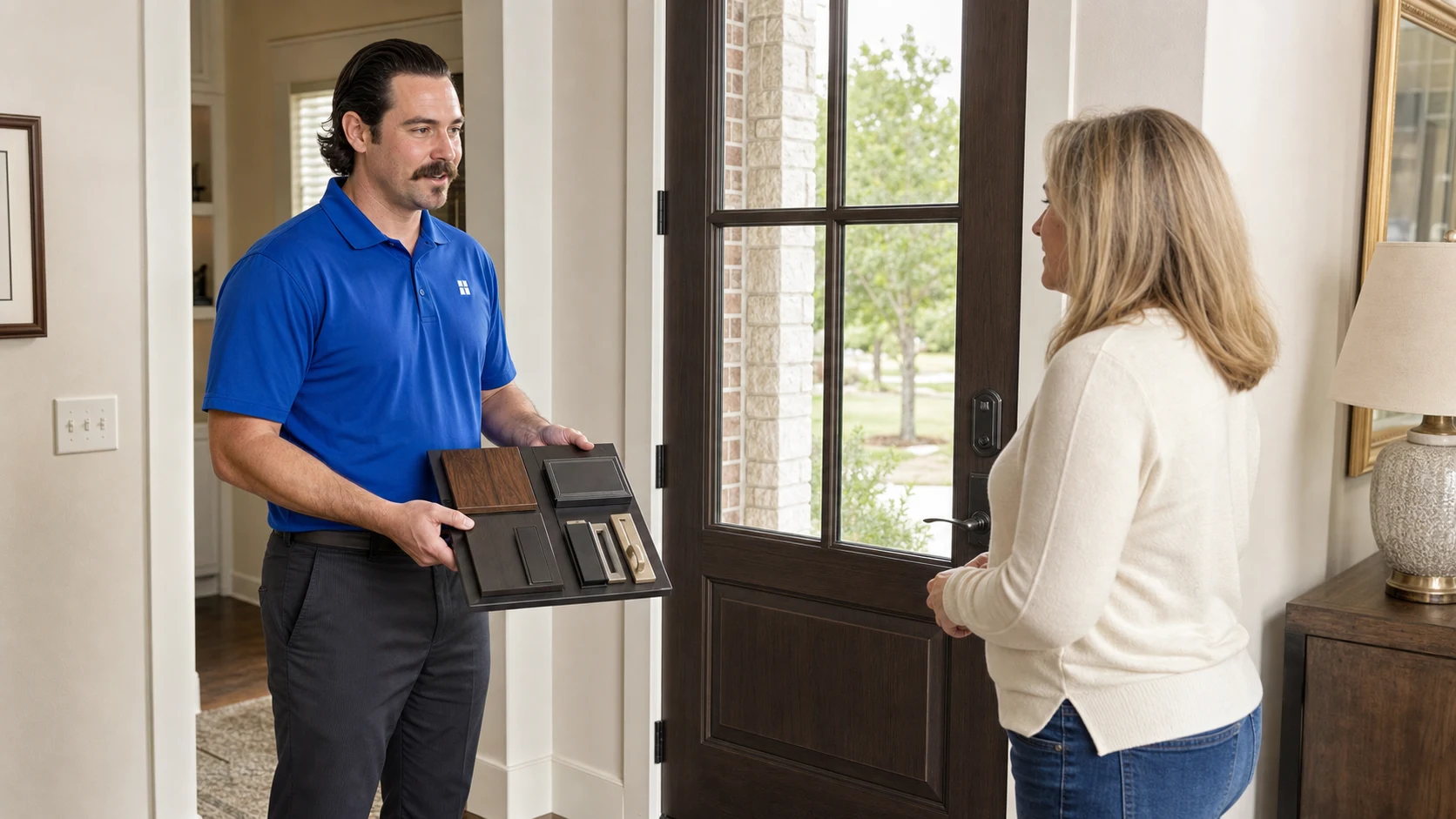
We serve homeowners from our Coppell showroom by appointment and offer in-home consultations and estimates. We install ProVia entry doors with customizable designs for homes across the region. We can inspect the full entry system and help you decide whether repair or replacement makes the most sense for your home.
Repair is more reasonable when the door is structurally sound and the failure is limited to replaceable sealing parts.
Replacement is more reasonable when comfort, operation, appearance, and security concerns overlap.
An estimate should explain the opening, not just the product.
A worn exterior door is easy to tolerate until the symptoms start stacking up. Drafts affect comfort. Poor sealing can work against your heating and cooling system. Sticking and swelling make daily use frustrating. A weak frame or misaligned lock can reduce security.
We specifically point to constant hot or cold drafts, cracked or warped condition, appearance problems, energy savings, and security as reasons to replace a door. Our ProVia doors include special security mechanisms, and we recommend a security plate built into the frame for added resistance.
The right next step is not to guess from the doorway. It is to look at the full entry system and decide whether the house needs a simple repair or a properly fitted replacement. Bring Clarity to your home.
Get a Clear Door Replacement Estimate
Schedule a conversation with us to review your entry door, compare practical replacement options, and choose a door system that fits your home, comfort goals, and security concerns.
Helpful Resources
Frequently Asked Questions
How do I know when it is time to replace my door?
It may be time when you feel constant hot or cold drafts, see daylight around the frame, notice cracked or warped surfaces, struggle with sticking or swelling, or have security concerns because the lock and frame no longer work cleanly together.
Can a drafty exterior door raise energy bills?
Yes. A drafty door can let conditioned air escape and outdoor air enter, which can make your HVAC system work harder. The size of the impact depends on the door, the opening, the weather, and the rest of the home's envelope.
Why is my front door hard to close?
Common causes include worn hinges, a shifted frame, swelling from moisture, a bowed slab, threshold problems, or hardware that no longer lines up. If adjustment does not hold, the full door system may need replacement.
Can a new entry door improve security?
Yes, when the door, jamb, hinges, strike area, lock, reinforcement, and installation all work together. A reinforced frame and properly installed strike area help the lock perform the way it should.
Should I repair weatherstripping or replace the door?
Repair weatherstripping when the door and frame are still straight, solid, and properly aligned. Consider replacement when worn seals are only one part of a larger problem, such as warping, daylight, sticking, damaged thresholds, or lock misalignment.