Energy-Efficient Replacement Windows for DFW Heat: Which Ratings Matter?
By late July in DFW, the weak windows usually announce themselves. The west-facing bedroom gets warmer than the thermostat says it should. The living room blinds stay closed even though the room needs daylight. The AC runs longer after dinner because the glass has been collecting heat all afternoon.
That is usually when a homeowner starts searching for energy efficient replacement windows near me and runs into a wall of ratings: U-factor, SHGC, low-E, argon, visible transmittance, air leakage, ENERGY STAR climate zones, and NFRC labels. The terms matter, but they only help when you know what problem each one solves.
For North Texas homes, the goal is not to buy the window with the most technical language attached to it. The goal is to choose a replacement window package that blocks harsh solar heat, insulates well, fits the opening correctly, and is installed with enough care that the rated performance can actually show up in the house.
Start With the Heat Problem You Can Feel
A DFW home does not need a lab report to tell you where the weak glass is. Rooms over the garage, second-story bedrooms, breakfast areas with large east-facing windows, and west-facing living rooms often feel different from the rest of the house. The question is whether the window is letting in too much solar heat, leaking air around the frame, failing to insulate, or some mix of all three.
If a room gets hot mainly when direct sun hits the glass, pay close attention to SHGC and low-E glass. If the room feels drafty in winter or hot air seems to creep in around the unit, look at U-factor, air leakage, installation quality, and the condition of the existing frame. If the window is hard to open, has damaged balances, or no longer locks cleanly, the performance issue may also be a function issue.
The most useful estimate conversation starts with real home conditions, not a product brochure. A good consultant should ask which rooms overheat, which sides of the house face the strongest sun, whether you plan to replace every window or phase the project, and how much daylight you want to preserve.
West-facing glass usually needs stronger solar heat control.
North-facing glass may benefit more from insulation and comfort than a very low SHGC.
Large picture windows and patio-facing glass can affect comfort more than smaller shaded windows.
Old installation gaps can undercut even a high-performing replacement window.
U-Factor Tells You How Well the Window Insulates
U-factor measures how readily heat moves through the window. Lower is better. ENERGY STAR explains that U-factor is one of the main ratings used for certified windows, and the NFRC label lists that number so homeowners can compare products on the same basis.
In plain English, U-factor is about insulation. In winter, a lower U-factor helps reduce heat loss from inside the home. In summer, it also helps slow heat transfer from hot outdoor air into conditioned rooms. That matters in North Texas because the window is not only fighting sunlight; it is also sitting in long stretches of hot outdoor air.
Do not treat U-factor as the only number that matters. A very low U-factor paired with weak solar control can still leave a west-facing room uncomfortable in August. For DFW heat, U-factor and SHGC need to be read together.
How to Read It on the Label
On the NFRC label, find U-factor first, then compare it with SHGC for the same product. Ask for the exact ratings for the windows proposed for your home, not only the name of the glass package. Different sizes, glass options, grids, and configurations can affect the final rated unit.
Lower U-factor means better insulation.
The number should come from the NFRC rating, not a vague sales claim.
Use the same rating type when comparing two estimates.
SHGC Matters When the Sun Is the Problem
Solar Heat Gain Coefficient, usually shortened to SHGC, measures how much solar heat passes through the glass. The scale runs from 0 to 1. Lower numbers block more solar heat.
This is the rating many North Texas homeowners feel most directly in summer. When the afternoon sun hits a west-facing bedroom in Coppell, Plano, Frisco, Irving, Grapevine, or Fort Worth, the glass can turn that room into a heat collector. A lower SHGC helps reduce that solar gain before it becomes extra work for the AC.
ENERGY STAR guidance for warmer climates emphasizes lower SHGC, especially for south, east, and west-facing windows. Its current window criteria vary by climate zone, so the right target should be checked for the county where the window will be installed. In practice, DFW homeowners should ask for windows certified for their ENERGY STAR climate zone and compare the SHGC on the NFRC label.
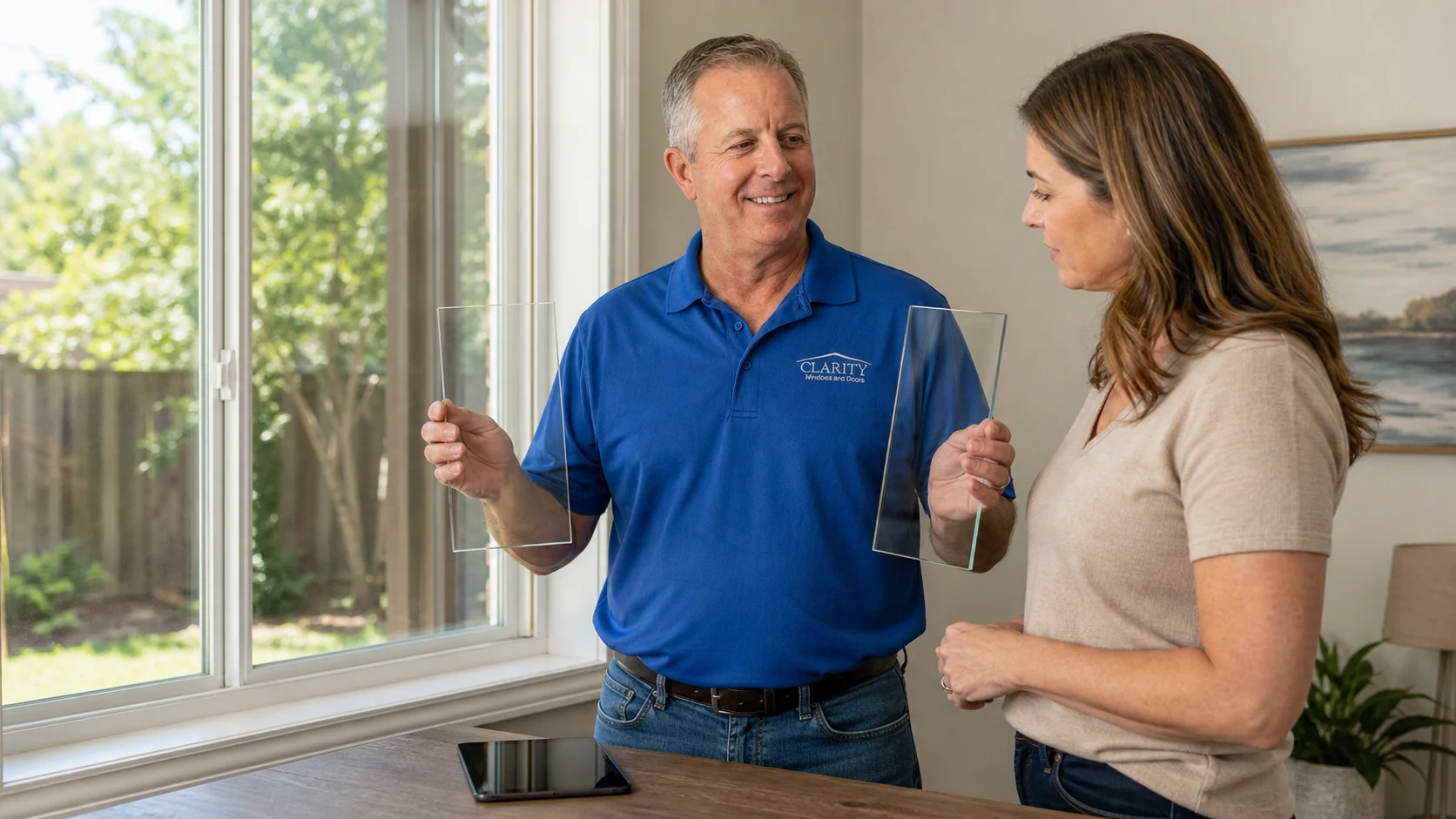
A lower SHGC does not mean the house has to feel dark. Low-E coatings can be tuned to block a large share of infrared heat while still allowing useful visible light. That is why a showroom visit can help. Seeing glass samples in person gives you a better sense of color, reflectivity, daylight, and privacy than a spec sheet alone.
Low-E Glass and Argon Gas Are Features, Not Ratings
Low-E glass and argon gas are often presented as if they are the rating. They are not. They are technologies that help the window reach better ratings.
Low-E means low emissivity. The Department of Energy describes low-E coatings as very thin layers that control heat transfer through insulated glass. Some coatings are designed for low solar gain, which is useful in hot, sunny climates because they help block heat from sunlight while still letting in daylight.
Argon gas is used between panes of insulated glass to reduce heat transfer. It is clear, odorless, non-toxic, and commonly used because it performs well in typical insulating glass spaces. Dual-pane glass, warm-edge spacers, low-E coatings, and gas fills all work together as a system.
That is why homeowners should avoid judging windows by one feature alone. A window can have low-E glass and still be the wrong choice if the SHGC is too high for a hot exposure. Another product may have the right glass package, but if it is installed poorly, gaps and water management issues can erase much of the comfort benefit.
Ask what low-E package is being proposed and why it fits your exposure.
Ask whether the quoted unit is dual-pane or another insulated glass configuration.
Ask for the NFRC U-factor and SHGC tied to the proposed product.
Ask how the installer will seal, insulate, and finish the opening.
The ENERGY STAR and NFRC Labels Keep the Conversation Honest
ENERGY STAR certified windows are independently tested, certified, and verified through NFRC ratings, and the current ENERGY STAR specification uses U-factor and, where applicable, SHGC requirements by climate zone. That matters because North Texas homeowners should not have to compare vague promises.
The NFRC label gives you the apples-to-apples numbers. U-factor and SHGC are the big two for most replacement window decisions in North Texas. Visible Transmittance tells you how much daylight comes through. Air Leakage shows the tested rate of air passing through the unit. Condensation Resistance can help when moisture on interior glass has been a concern, though condensation can have several causes and does not automatically mean a window has failed.
If you receive more than one estimate, compare the labels and the installation scope together. A lower SHGC may be valuable on the west side of the house. A clean air sealing plan may matter more in a drafty older opening. A large custom window may need careful product selection so comfort, sightlines, operation, and appearance all work together.
When someone asks, who should I hire for energy efficient window replacement in Dallas-Fort Worth, the answer should include more than a product name. Hire a company that can explain the ratings, show you samples, give a clear estimate, and install the product with trained window-and-door crews.
A Simple Label Reading Order
Use this order when comparing two proposed window packages. It keeps the conversation tied to measurable performance before you move into style, color, grids, and hardware.
Confirm the product is ENERGY STAR certified for your county’s climate zone.
Compare SHGC for sun-exposed rooms.
Compare U-factor for whole-home comfort.
Review Visible Transmittance if daylight is a priority.
Ask how Air Leakage and installation details will be handled.
Installation Decides Whether the Ratings Hold Up
A rated window is tested as a product. Your home gets a product installed into a real opening with old trim, brick, siding, framing conditions, and weather exposure. The difference matters.
In North Texas, replacement windows have to handle heat, wind-driven rain, seasonal movement, and long cooling seasons. The installer’s work around measurement, removal, shimming, fastening, insulation, sealant, and cleanup affects how the finished unit performs. Even the best glass package cannot solve an opening that was measured carelessly or sealed poorly.
Clarity Windows and Doors works from its Coppell showroom at 800 Freeport Pkwy Suite #150 and serves homeowners across Dallas-Fort Worth and North Texas. The showroom is available by appointment for homeowners who want to see window and door options in person before making a decision.
For Clarity, the estimate process should connect the technical ratings to the way you actually live in the house. That may mean prioritizing sun control for a west-facing wall, matching style options to an older brick home, or talking through financing options when a full-home replacement makes more sense than a room-by-room project.
What to Ask Before You Approve an Estimate
If you searched which window installer near me offers energy efficient replacement windows and a free estimate, use the estimate appointment to test how clearly the company explains the decision. You should come away knowing which windows are proposed, which ratings matter for your home, and how the installation will be handled.
Ask for direct answers in plain English. A confident window specialist should be able to explain why a glass package is right for a west-facing bedroom, why another option may be enough for shaded windows, and how the finished project will be supported if service is needed later.
Also ask who performs the installation. Clarity’s site describes its installers as Clarity Craftsmen and states that the company does not use random subcontractors or day laborers. For a homeowner comparing energy efficient replacement windows, that detail matters because performance depends on both product selection and the crew putting the windows in.
Which ENERGY STAR climate zone applies to my home?
What are the exact NFRC U-factor and SHGC ratings for the proposed windows?
Which rooms need stronger solar heat control?
Can I see window samples, colors, grids, and glass options?
Who installs the windows, and how are openings sealed and finished?
What warranty coverage applies to the product and installation?
Is financing available for the project size I am considering?
Energy-efficient windows are not all trying to solve the same problem. In DFW, the right replacement window needs a strong balance of solar heat control, insulation, visible light, fit, and installation quality.
Start with the rooms that bother you most. Then compare the NFRC ratings, confirm ENERGY STAR guidance for your county, and ask how the proposed glass package fits each side of the house. When the numbers and the installation plan both make sense, the decision gets much clearer.
Get a Clear Window Estimate for Your DFW Home
Clarity Windows and Doors provides energy-efficient replacement windows, installation support, financing options, and appointment-based showroom visits for homeowners across Coppell, DFW, and North Texas. Schedule a free in-home consultation and estimate, or visit the Coppell showroom by appointment to compare window options in person. Bring Clarity to your home.
Helpful Resources
Frequently Asked Questions
What is a good SHGC for windows in North Texas?
For hot, sunny exposures in North Texas, a lower SHGC is usually better because it blocks more solar heat. ENERGY STAR guidance for warmer climates points homeowners toward low SHGC values, and the exact target should be checked against the ENERGY STAR climate zone for your county.
What does U-factor mean on a window label?
U-factor measures how much heat moves through the window. Lower numbers mean better insulation. In DFW, a low U-factor helps with year-round comfort, but it should be compared alongside SHGC because summer solar heat is often the bigger room-by-room problem.
Do ENERGY STAR windows really lower energy bills?
ENERGY STAR states that certified windows, doors, and skylights can reduce heating and cooling costs nationally compared with non-certified products, though actual savings vary by climate, utility rates, home condition, window orientation, and installation quality.
Are low-E windows worth it in Dallas-Fort Worth?
Low-E glass is often worth considering in DFW because it can help control heat transfer and solar gain. The key is choosing the right low-E package for the home’s exposure, then confirming the U-factor and SHGC on the NFRC label.
How do I compare NFRC labels?
Start with SHGC for rooms that overheat in direct sun, then compare U-factor for insulation. Review Visible Transmittance if daylight matters, Air Leakage for draft concerns, and Condensation Resistance when interior moisture has been an issue. Always compare ratings for the actual proposed window.
Should I visit a showroom before choosing replacement windows?
A showroom visit can help when you want to compare glass appearance, frame colors, grids, hardware, and operation in person. Clarity’s Coppell showroom is available by appointment.