Entry Door Installation Near Me: Why Proper Fit Matters as Much as the Door
A homeowner in Coppell can spend weeks choosing the right entry door: fiberglass or steel, stained or painted, clear glass or privacy glass, modern panel or classic raised panel. Then installation day comes, and the part that decides how the door actually lives in the house happens in a few hours at the front opening.
That is where a good door becomes a working entry system. The slab, frame, sill, hinges, strike plate, weatherstripping, trim, and sealant all have to meet an opening that may have shifted from years of North Texas heat, foundation movement, wind, and use. That’s why finding an entry door installer isn’t just about picking a product.
We’re based in Coppell and serve homeowners across Dallas-Fort Worth with entry doors, windows, patio doors, and related service. Improper door work can affect security, energy efficiency, and overall performance: a door needs to close snugly against all weatherstripping with no gaps.
The Door Is Only One Part of the System
When homeowners search for entry door installation near me, the first results often show door styles, glass packages, colors, and hardware finishes. Those choices matter. A front door shapes curb appeal before guests ever step inside, and the wrong style can feel out of place on a brick home in Flower Mound, a painted siding home in Frisco, or a traditional brick-and-stone exterior in Southlake.
Fit is less visible in a showroom, but it is what you notice every day. If the reveal around the slab is uneven, the door can look crooked even when the product is new. If the sweep misses the threshold, hot air can move under the door in August. If the latch and deadbolt do not meet the strike area cleanly, you may have to lift the handle or push the slab with your hip just to lock up at night.
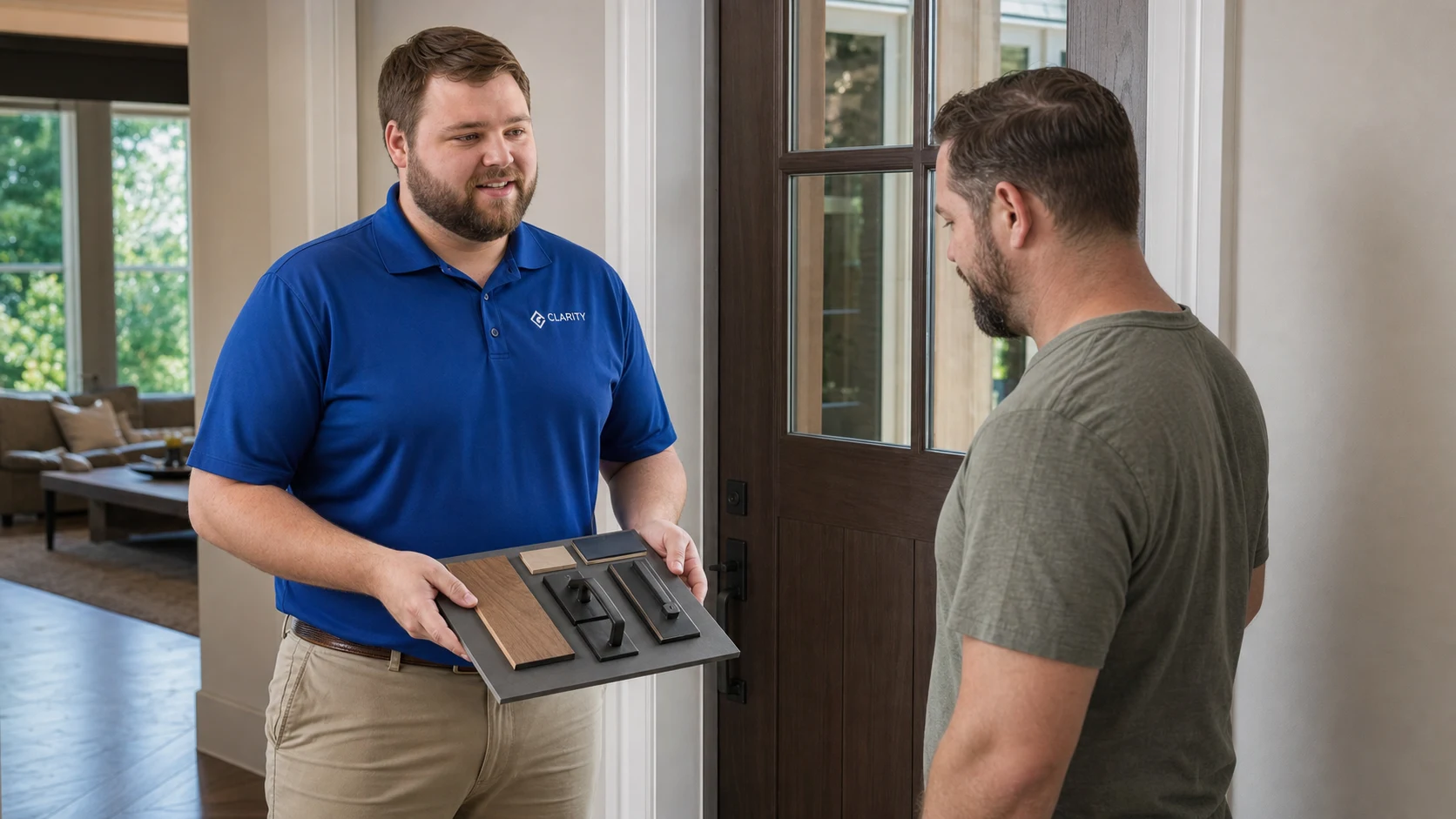
We offer ProVia doors, and ProVia requires dealer installation training. Our installers are Clarity Craftsmen, and we don’t use random subcontractors or day laborers. Worth checking when you compare providers: the installer isn’t a side detail; they’re the person adapting a manufactured system to your actual home.
That matters in Dallas-Fort Worth because many replacement projects are not happening in perfect new-construction openings. The existing frame may be out of square. The threshold may have settled. Brickmould may hide old caulk, rot, or uneven framing. A trained installer knows when the new unit needs careful shimming, when the sill needs support, and when a cosmetic shortcut would create an operation problem later.
What Proper Fit Looks Like After Installation
A properly installed entry door should not feel fussy. You should be able to swing it open without scraping, close it without slamming, and lock it without pulling the slab into place. When a homeowner tells us, "It works if I push it just right," that usually points to an alignment problem, not a normal break-in period.
The installer checks the rough opening, sets the frame plumb and level, squares the unit, and confirms that the slab sits evenly inside the frame. The gap at the top and sides should look consistent. Hinges should carry the door without sagging. The latch should meet the strike plate without grinding. The bottom sweep should contact the threshold enough to seal, but not so tightly that the door drags.
Weatherstripping is another small detail with a large effect. ENERGY STAR identifies windows and doors as common places for air leaks, and its air-sealing guidance points to drafts, visible gaps, dust, pests, and outside odors as signs that an opening may need attention. On an entry door, the seal should compress evenly along the jambs and head when the slab closes.
In North Texas, that seal has to handle long cooling seasons, wind-driven rain, pollen, dust, and quick temperature swings. A door that looks straight from the curb can still leak if the frame is twisted or the threshold is not adjusted to the sweep.
Even reveal around the slab
Smooth swing without scraping
Latch and deadbolt alignment without forcing
Consistent weatherstripping contact
Threshold support and proper sweep contact
Clean exterior sealing around the finished opening
Square, Plumb, and Level in Plain English
Square means the frame corners are true enough for the slab to sit evenly. Plumb means the sides stand straight up and down. Level means the top and sill sit correctly from side to side. If one of those is off, the door may still close on day one, but the stress shows up in rubbing, uneven gaps, lock problems, or early wear.
Security Depends on More Than the Lockset
Many homeowners think about security by choosing a strong deadbolt or heavier door slab. Those are useful pieces, but the strength of the entry depends on how the hardware, frame, jamb, strike area, and fastening work together. A deadbolt cannot do its job if it barely enters the strike, if screws are too short for the framing, or if the reinforced parts are not aligned.
We recommend doors with a security plate built into the frame, and professional guidance and installation are part of getting a safer door. Our ProVia doors use a special metal security plate in the jamb. The point is not just that a component exists; it has to be installed as part of a complete system.
You don’t need to memorize a component list, just ask whether the installer is setting up the complete entry system so the reinforced parts line up and work together.
When those details are right, the door just closes, locks, and stays put. No drama.
Manufacturer Recommendations Protect Performance
A replacement door is not a loose collection of parts. Manufacturers design the slab, frame, sill, weather seals, glass, hinges, and hardware to work as a tested system. ProVia says its door technology focuses on components down to small details, including appearance, durability, energy efficiency, structure, finish, and hardware.
Installer experience matters because those product details can be weakened by a poor setup. Too little support under the sill can lead to movement. A frame pulled too tight can bind the slab. Missing or poorly placed shims can let the unit rack over time. Excess caulk in the wrong place may hide a problem instead of solving it.
Warranty coverage can also depend on whether the door was installed according to manufacturer recommendations. We offer warranty support and a straightforward service request process for our doors and related products, but the best warranty experience starts with a correct installation. The goal is to prevent avoidable service issues, not merely respond to them later.
Local requirements also deserve attention. The City of Coppell notes that contractors performing work are required to be registered with the city, and its permitting page lists residential permit categories and inspection resources. Requirements vary by city and project scope across DFW, so a local installer should know when to check the authority having jurisdiction instead of guessing.
What to Expect From a Careful Entry Door Installation
A good installation day should feel organized. Before the old door comes out, the crew confirms the work area, protects nearby floors or finishes as needed, and reviews the opening. For many projects, door replacement happens one opening at a time so the home is not left exposed to weather.
Once the old unit is removed, the installer can inspect the condition of the sill area, framing, trim, and surrounding materials. If there is hidden damage, it should be discussed before the new door is set. After that, the new frame is positioned, shimmed, fastened, sealed, and trimmed, with repeated checks along the way.
The final walkthrough should cover more than the finished look. You should see how the door swings, latches, locks, seals, and meets the threshold. Ask the installer to show you any adjustable features, explain normal operation, and point out anything you should watch after the first few weeks of use.
This is also when you can catch small issues while the crew is still there: a sweep that drags, a lock that needs too much force, a gap in the weatherstripping, or trim that does not look clean. A professional installer expects those checks.
Confirm the opening, product, swing direction, and work area
Remove the existing unit carefully
Inspect the exposed opening
Set, shim, fasten, seal, and finish the new door
Test swing, latch, lock, sweep, weatherstripping, and threshold contact
Complete a homeowner walkthrough
How to Compare Exterior Door Installers Near You
When you compare providers, ask questions that reveal how the work will actually be done. The lowest estimate may not include the same product, installation method, finishing details, warranty handling, or service support. The most expensive option is not automatically the right one either. You need enough detail to compare the full project.
Start with who installs the door. Ask whether the crew is company-trained, whether subcontractors are used, and who handles service if something needs adjustment. Ask what happens if the opening is out of square, how the threshold will be supported, how the exterior will be sealed, and how the crew checks the latch and deadbolt before leaving.
For homeowners searching door installation near me or exterior door installation near me, local familiarity is part of the value. DFW homes vary by age, exterior material, foundation behavior, HOA expectations, and city requirements. An installer who works across Coppell, Dallas, Plano, Frisco, Irving, Carrollton, Lewisville, Grapevine, and Fort Worth sees those patterns often.
A useful estimate should connect the door you want with the way it will be installed. Style, glass, color, hardware, energy performance, security, financing options, and warranty support all belong in the same conversation because they affect the same opening.
Who performs the installation?
Are installers trained on the door system being installed?
How will the existing opening be measured and evaluated?
What finishing, sealing, and cleanup are included?
How are warranty and service requests handled?
Can I see door samples or visit the showroom by appointment?
A new entry door should improve the way your home looks, feels, closes, seals, and locks. The product matters, but the fit decides whether those benefits show up every day.
We help North Texas homeowners choose entry doors that fit the home, the opening, and the way the door needs to perform. If your front door is drafty, hard to lock, worn out, or no longer right for your home, start with a clear look at both the door and the installation behind it.
Plan Your Entry Door Estimate
Visit our Coppell showroom by appointment or contact Clarity Windows and Doors to talk through entry door styles, installation details, financing options, and warranty support for your Dallas-Fort Worth home. Bring Clarity to your home.
Helpful Resources
Frequently Asked Questions
Why does door installation experience matter?
Experience matters because the installer has to set the entire door system into your actual opening. Alignment, shimming, fastening, threshold support, sealing, latch fit, and manufacturer recommendations all affect how the door operates.
What happens if an exterior door is not installed square?
A door that is not square may rub, show uneven gaps, leak air, drag at the sweep, or become hard to latch and lock. Small alignment issues can turn into daily frustration.
How should a new entry door seal against weatherstripping?
The slab should close snugly against the weatherstripping with even contact along the sides and top. The sweep should meet the threshold without leaving daylight or making the door hard to open.
Does the installer affect warranty coverage?
The installer can affect warranty outcomes because manufacturers expect products to be installed according to their recommendations. Correct installation helps protect performance and reduces avoidable service issues.
What should I expect during entry door installation?
Expect the crew to confirm the opening and product, protect the work area, remove the old unit, inspect the exposed opening, set and seal the new door, test operation, and complete a final walkthrough with you.