Front Door Installation in Coppell: How to Choose Style, Glass, Hardware, and Finish
A front door has to do several jobs at once. It sets the first impression from the street, handles daily traffic, helps manage heat and drafts, protects privacy, and needs to feel solid every time it closes. That is a lot to ask from one opening, especially in neighborhoods where brick elevations, shaded porches, direct afternoon sun, and HOA design expectations can all affect the right choice.
When homeowners ask us about front door installation in Coppell, the conversation usually starts with style but quickly turns practical. How much glass is too much? Will a dark finish hold up on a west-facing entry? Should the new door match the interior trim or the exterior brick? What hardware actually fits the way the family uses the home?
We offer front entry doors for Dallas-Fort Worth homeowners, with ProVia doors as a core entry option. We also run a local showroom by appointment, which matters for this kind of decision because door glass, grain texture, paint tone, and hardware feel are difficult to judge from a thumbnail.
Start With the Home, Not the Door Sample
A door that looks beautiful on a display wall can feel wrong once it is installed on the wrong elevation. The safer starting point is the home itself: roofline, brick color, trim width, porch depth, window shapes, and the size of the entry opening.
Here’s the tension: homeowners want a noticeable entry, but the strongest curb appeal usually comes from proportion and fit, not the loudest door on the sample wall.
For many homes in the area, a clean panel design with carefully chosen glass can do more than a busy pattern. A traditional brick home may call for raised panels, divided glass, or a stained woodgrain look. A newer transitional home may look better with a smoother finish, simpler panel lines, and hardware that feels current without fighting the architecture.
Scale matters, too. A single door with sidelites makes a different statement than a wider slab, a transom, or a double-door look. If the current entry feels too dark, the answer may be decorative or privacy glass. If the entry already has a lot happening, the better move may be a quieter door with stronger color and cleaner hardware.
We can help you compare these options rather than treating the door as a stand-alone purchase. The goal is not just a new slab. It is a front entry system that looks intentional from the curb and feels right from the inside.
Match the door style to the home’s architectural lines before choosing color.
Consider the full opening: slab, sidelites, transom, trim, threshold, and hardware.
Use showroom samples to compare texture and finish in person when possible.
Choose Glass for Light, Privacy, and Daily Use
Glass is often the hardest choice because it changes both the outside look and the inside experience. Full-lite glass can brighten an entry and make a smaller foyer feel more open. Half-lite or top-lite designs bring in daylight while keeping more of the door solid. Sidelites can soften the entry without putting glass directly at eye level in the main slab.
Before choosing a decorative pattern, stand where visitors stand. Look from the sidewalk, from the porch, and from inside the foyer at night. A design that feels private in daylight may feel different when interior lights are on.
That walk-up test is what separates a pretty design from one you’ll actually live with comfortably.
ProVia lists several door glass categories, including clear glass and grids, tinted glass, art glass, decorative glass, wrought iron glass, privacy glass, silk screen glass, and internal blinds. The right choice depends on what the door faces. A front door that looks toward a quiet cul-de-sac can handle more transparency than one facing a busy sidewalk or a close neighbor’s window.
Decorative glass can add character, but privacy level should come first. Texture, caming, opacity, and pattern density all affect how much someone can see through the door. If your current entry feels dark, you do not have to choose between light and privacy. The better comparison is which glass style gives enough daylight without making the foyer feel exposed.
When Sidelites or a Transom Make Sense
Sidelites and transoms can make the entry feel larger without changing the door’s daily function. They are useful when the porch is deep, the foyer needs daylight, or the exterior elevation needs more balance around the opening.
They also deserve careful privacy planning. A narrow sidelite next to the lock side may feel different than glass above the door or on the hinge side. Seeing the proportions in person can prevent a choice that looks good online but feels too open at home.
Compare Materials and Finishes Before You Fall for a Color
Color is the fun part, but material and finish should guide the decision. North Texas heat, direct sun, seasonal temperature swings, and repeated use can punish a front door that was chosen only for appearance.
ProVia’s Signet fiberglass doors offer a wide selection of door styles, with or without glass, plus sidelites, transoms, 8-foot doors, inscribed doors, and simulated divided panel options. ProVia also notes that the Signet line can be ordered in smooth finish or woodgrain looks such as Cherry, Mahogany, Oak, Knotty Alder, and Fir.
Fiberglass is often appealing when a homeowner wants the warmth of a wood look with less routine maintenance than natural wood. A smooth painted finish may fit a cleaner architectural style. A woodgrain finish may make more sense when the home already has stained shutters, warm brick, bronze hardware, or other traditional details.
Steel can be the right answer when security and rigidity are a priority. ProVia describes its Legacy steel exterior doors as 20-gauge steel, with more galvannealed steel than a standard 24-gauge door. The same product information notes that Legacy doors can be customized on both sides with different styles or finishes.
That two-sided customization can matter more than homeowners expect. The outside may need to work with brick, stone, porch lighting, and roof color, while the inside may need to match painted trim, flooring, stair parts, or the view from the main living space.
Use the exterior finish to coordinate with brick, trim, roof color, and porch lighting.
Use the interior finish to fit the foyer and adjacent rooms.
Ask how the finish choice fits your door exposure, especially on sunny entries.
Hardware Should Match Security, Style, and How the Door Is Used
Hardware is more than jewelry for the door. It affects how the entry feels in your hand, how easily guests use it, how the lock aligns, and whether the finished entry looks balanced.
A modern long handle set may look right on a tall, simple door. A more traditional knob or grip set may fit a raised-panel design better. Finish matters as well. Matte black, satin nickel, aged bronze, and brass can each change the tone of the same door color.
The practical comparison is not just which hardware looks best in a photo. Think about how the door is used. Does someone carry groceries through it every day? Do children need an easy latch? Is the porch covered or exposed? Is the lock side tight against a wall, sidelite, or storm door?
A beautiful lock can’t make up for a poorly fitted slab or weak alignment. Choose hardware after the door style is settled, then make sure the installation backs it up.
That is why a front door replacement should include the full system: measurement, slab, frame condition, threshold, weatherstripping, lockset, strike alignment, and final adjustment. When those pieces work together, the door closes cleanly and the hardware can do its job.
Installation Quality Decides How the Door Performs
A good entry door can underperform if the opening is measured poorly or the frame is not handled correctly. Small installation issues can show up later as daylight around the edges, rubbing, lock misalignment, water concerns, or a threshold that never feels quite right.
We’ve installed ProVia doors since 2008, and ProVia requires authorized dealers to complete specialized training. We’re an authorized ProVia dealer and offer professional guidance for design, security, energy efficiency, and curb appeal.
Those details matter more than a generic product list, because the project depends on both the door and the crew.
A proper door installation starts with the real opening, not a guess from the old door size. The installer needs to account for the existing frame, sill condition, wall depth, flooring transitions, trim, and how the door will swing. If sidelites or a transom are involved, the planning becomes even more important because the whole assembly has to sit square, seal properly, and look balanced.
We serve homeowners across the area with window and door work, which matters when your project is tied to a specific home rather than a general product search. A door for a shaded north-facing porch may call for different finish and glass thinking than a west-facing entry that gets strong afternoon sun.
Use the Showroom to Narrow the Final Choices
Online photos are useful for gathering ideas, but a front door is a physical product. The grain should look right up close. The paint or stain should work with your brick. The glass should feel private from a normal walking distance. The hardware should feel comfortable in your hand.
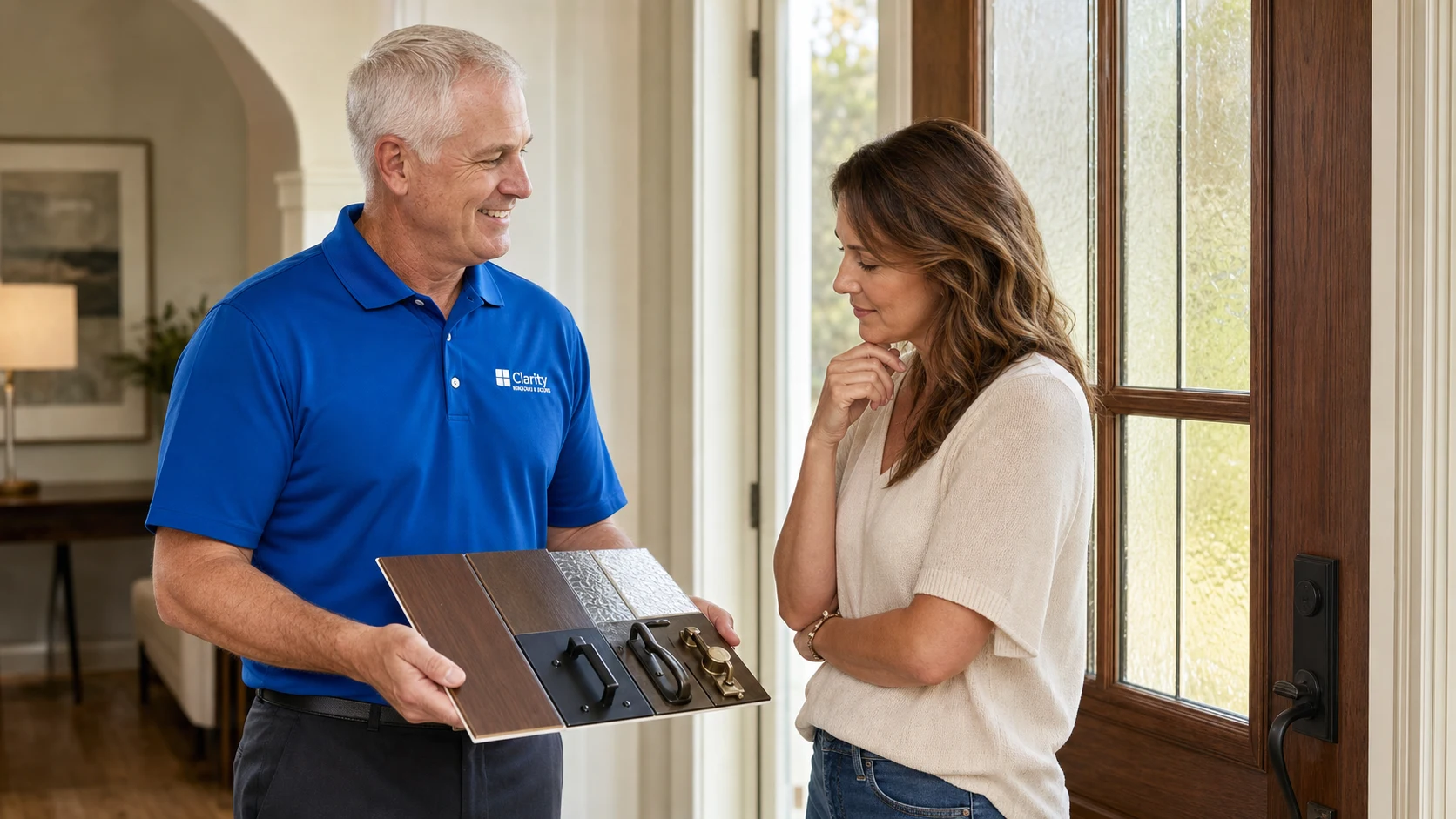
Our showroom on Freeport Parkway is open by appointment, so you can see window and door products in person with expert help. It gives you a practical way to compare finish samples, glass patterns, hardware options, and door styles before committing to the final design.
Bring photos of the front of your home, the foyer, porch lighting, and any nearby windows or trim. If the entry has direct sun, a tight porch, unusual trim, or HOA guidelines, mention that early. Those details help narrow the choices faster.
We can help you compare ProVia entry door styles, glass, finishes, hardware, and installation details through a showroom appointment or in-home consultation. Visit our showroom by appointment or request a consultation to choose a front door system that fits your home, your privacy needs, and your daily use.
Bring exterior and interior photos of the entry.
Compare glass privacy from more than one viewing distance.
Look at finish samples next to your home’s brick, trim, and hardware colors.
Ask how the door will be measured, installed, adjusted, and supported.
The best front door is not chosen by style alone. It comes from matching the door to the home’s architecture, choosing glass around real privacy needs, selecting a finish that fits the exposure, comparing hardware after the design is clear, and making sure the installation supports the whole system.
For homeowners considering a door replacement, the showroom visit is often where the decision gets easier. Samples turn abstract choices into real ones, and an experienced installer’s perspective can prevent a beautiful door from becoming a frustrating daily detail.
Plan Your Front Door Project
Visit our showroom by appointment or request a consultation to compare ProVia entry door styles, glass, finishes, hardware, and installation details for your home. Bring Clarity to your home.
Helpful Resources
Frequently Asked Questions
How do I choose the right front door style?
Start with the architecture of the home, not the door sample. Match the panel layout, glass size, finish, and hardware to the brick, trim, roofline, porch depth, and scale of the entry opening.
Should my front door include decorative glass?
Decorative glass can add daylight and curb appeal, but privacy should guide the choice. Compare how the glass looks from the porch, sidewalk, and foyer before deciding on the pattern and opacity.
Which front door finishes hold up best?
The right finish depends on material, exposure, color, and maintenance expectations. In North Texas, direct sun and heat should be part of the conversation before choosing a dark paint, smooth finish, or woodgrain stain.
Can I customize each side of an entry door?
Some ProVia entry door options allow different styles or finishes on each side. That can help the exterior coordinate with brick and trim while the interior fits the foyer, flooring, and room finishes.
What hardware options should I compare?
Compare handle style, finish, lock function, grip comfort, and how the hardware fits the door design. Hardware should be chosen after the door style is settled, then installed with proper alignment.
Do I need an appointment for the Clarity showroom?
Yes. The showroom on Freeport Parkway is open to the public by appointment, so homeowners can see window and door products in person with expert help.