Replacing a Front Door in Coppell: Curb Appeal, Security, and Comfort Considerations
A front door usually starts sending small signals before it becomes an obvious problem. Maybe the finish has faded unevenly from afternoon sun. Maybe the deadbolt takes a shoulder bump to line up. Maybe light shows at the bottom corner, or the entry feels warmer than the rest of the house on a July afternoon in North Texas.
Those details matter because a front door is not just a slab. It is the first thing guests see, one of the most-used openings in the home, and part of the envelope that helps separate conditioned indoor air from regional heat, wind, and seasonal cold snaps. If you are comparing front door replacement in Coppell, the best decision usually comes from looking at curb appeal, security, comfort, material, and installation together.
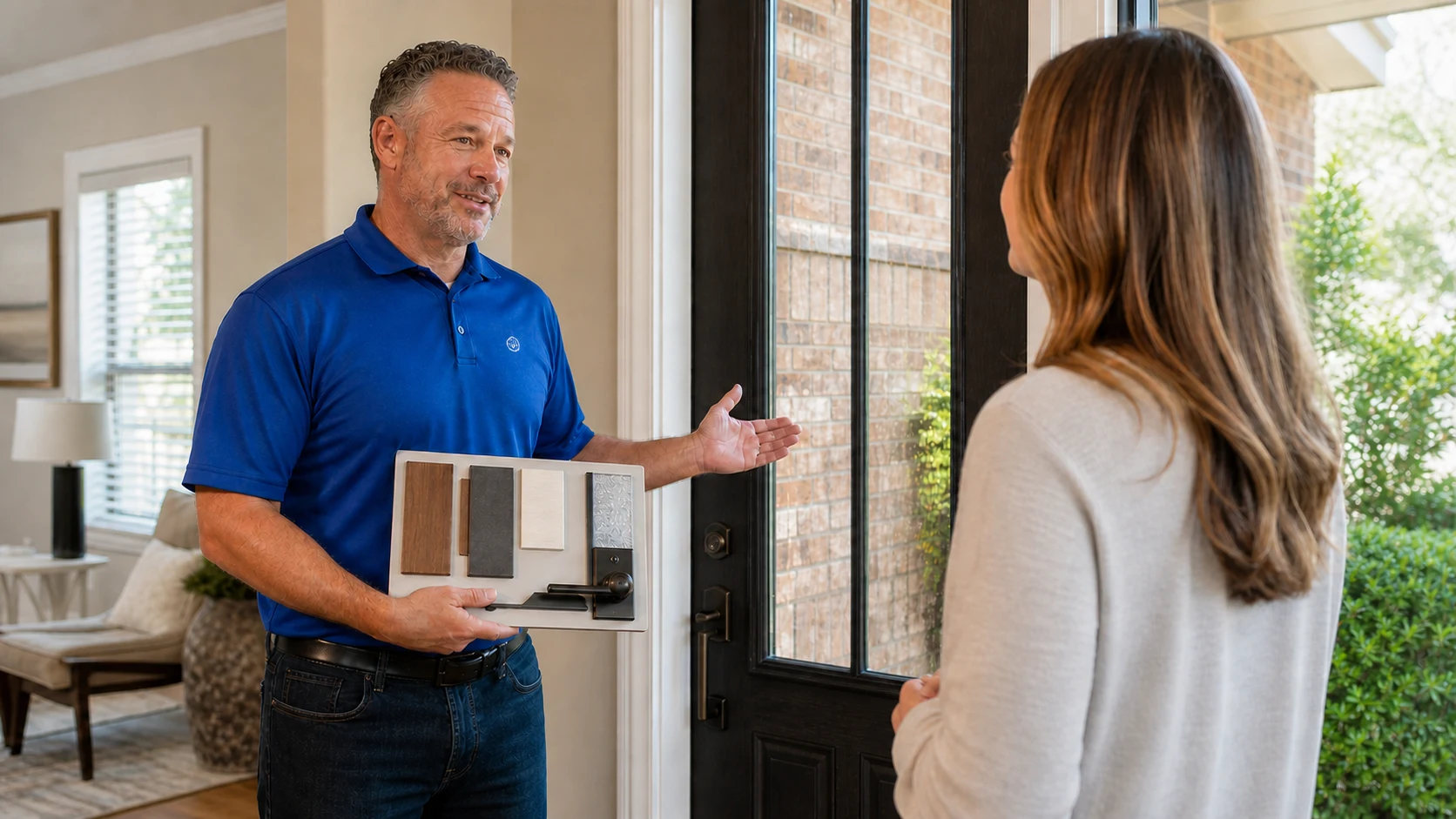
We serve homeowners from our local showroom and offer front entry door options through ProVia, with design choices for style, glass, material, and finish. The goal is to help you choose a door that fits your home, not a generic upgrade that only looks good in a catalog.
When a Front Door Becomes More Than a Cosmetic Problem
A faded finish alone does not always mean the door has failed. Local homes with west-facing entries can take hard sun, and some cosmetic wear can be handled with maintenance if the door still seals, locks, and operates properly.
A new entry starts to make more sense when several symptoms show up together. If the door rubs at the top, the latch misses the strike plate, the threshold has gaps, and weatherstripping no longer makes steady contact, something in that system has broken down. A door can look decent from the curb and still perform poorly every time the family comes and goes.
Pay attention to movement. A door that sticks only during damp weather may be reacting to humidity. A door that has to be lifted, pushed, or slammed on normal days may have a slab, frame, hinge, or jamb issue. If you can see daylight around the perimeter or feel air moving near the threshold, that is no longer just an appearance concern.
Security signs matter, too. A loose strike area, cracked jamb, soft threshold, or deadbolt that barely catches is not something to ignore. If the lock only works when the door is forced into position, that's a sign of a bigger alignment or security problem.
Consider a new door when the existing one is warped, cracked, hard to lock, visibly drafty, poorly aligned, or no longer fits the look of the home.
Ask for an in-person evaluation when the problem involves both the door and the frame, because replacing only one part may not solve the issue.
Curb Appeal Starts With Proportion, Not Just Color
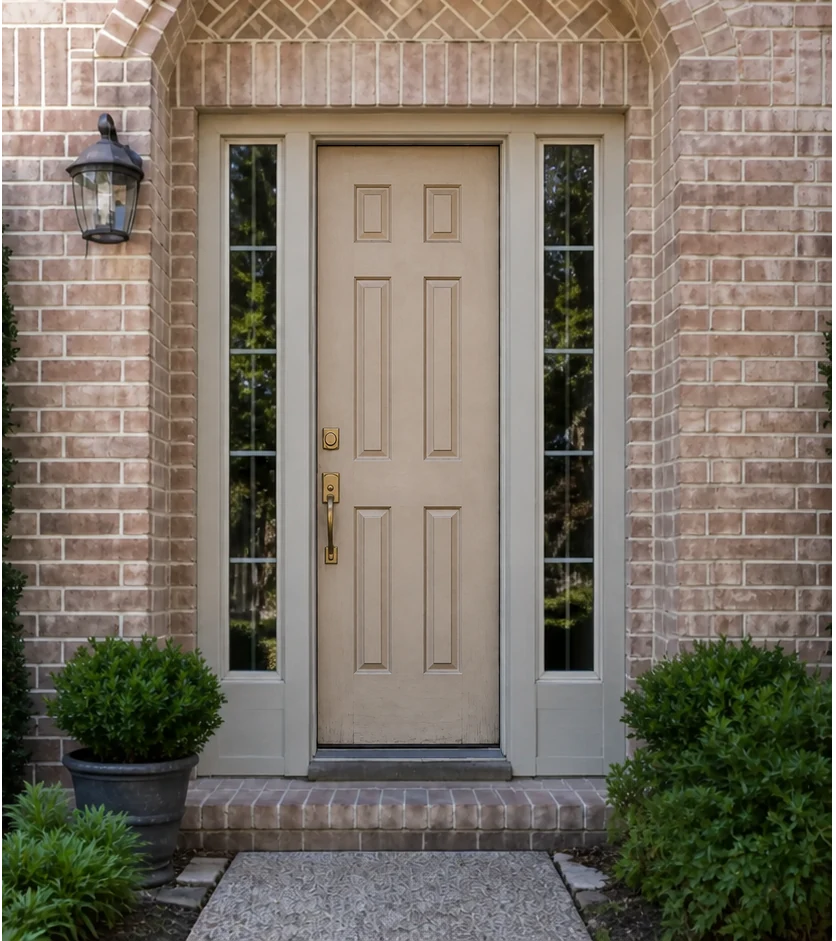
Front doors carry a lot of visual weight on brick homes, especially when the entry is the strongest contrast point on the whole front elevation. A better door can make the home look cared for before anyone notices the roofline, landscape, or porch light.
The goal isn't to make the entry shout; it's to make the whole front elevation look cared for. That means the door style should respect the architecture around it. A traditional brick home may call for a paneled door with restrained glass. A cleaner transitional exterior might handle a simpler slab profile, narrow glass, or a darker finish. Sidelites, transoms, and trim color can change the impression as much as the door itself.
Color should be chosen against the real exterior, not against a small sample in isolation. Brick undertones, roof color, stone, gutters, shutters, and porch shade all affect how a finish reads. A rich blue, black, red, green, or stained wood look can be beautiful, but the right answer depends on the house and the amount of direct sun the entry receives.
Stop by our showroom by appointment to see door and window products in person before narrowing down your decision. Samples help homeowners compare finish, glass privacy, panel depth, and hardware in a way that a screen cannot fully show.
Material Choice Should Match the Home's Exposure and Daily Use
A front door in this area has to deal with heat, sun, wind-driven rain, frequent use, and changing humidity. Material choice affects appearance, strength, maintenance, and how the door feels over time.
We've installed ProVia doors since 2008 and are an authorized ProVia dealer. ProVia entry doors include fiberglass and steel options, along with choices for glass, finish, panel style, and hardware. The practical question is not which material sounds best in general. It is which one fits the opening, the exposure, and the way the household uses the entry.
Fiberglass Entry Doors
Fiberglass is often a strong fit for homeowners who want the look of painted or stained wood with lower upkeep than a traditional wood door. It can work well on entries that get sun exposure or regular family traffic, especially when the finish and glass package are selected for the house rather than chosen from a single photo.
Steel Entry Doors
Steel can be a good option when strength, clean lines, and a crisp painted finish are priorities. It is commonly considered for security-minded projects, but the door slab is only one part of the system. Frame condition, jamb reinforcement, hinges, strike placement, glass choice, and installation all affect the finished result.
Glass, Privacy, and Light
Decorative glass can brighten a dark entry, but it should be chosen with privacy and heat exposure in mind. A full glass style may look inviting on one home and feel too exposed on another. Narrow glass, textured glass, sidelites, or a higher panel layout can bring in light without making the entry feel open to the street.
Comfort Comes From the Whole Entry System
A draft at the front door can make a foyer uncomfortable even when the HVAC system is doing its job. In North Texas, the same weak seal that lets in winter air can also let hot outdoor air press into the home during summer.
Energy efficiency is often described with technical ratings, but the everyday experience is simple: the door should close squarely, seal evenly, and reduce unwanted air movement around the opening. A foam-filled door slab helps slow heat moving through the door itself. Weatherstripping, the sweep, the threshold, and the fit between the slab and frame help limit air movement at the edges.
Glass matters as well. ENERGY STAR explains that certified windows, doors, and skylights are tested and verified through NFRC procedures, and door criteria depend in part on how much glass the door has. ProVia also describes energy-focused construction details such as polyurethane cores, weatherstripping, sweeps, thresholds, and insulated glass packages on applicable models.
That does not mean every home needs the same door. A shaded front porch, a west-facing entry, a sidelite-heavy opening, and a narrow covered entry each place different demands on the product. We can help you think through that broader exterior discussion without turning a door project into more work than the home needs.
Ask how the door slab, glass, threshold, sweep, weatherstripping, and installation method work together.
Look for a door that is appropriate for the home's exposure and climate zone, not just one labeled efficient in broad terms.
Security Is Built Around the Door, Frame, and Installation
A secure-feeling entry comes from the combined strength of the slab, frame, jamb reinforcement, strike area, hinges, glass choices, lockset, and installation. If one of those pieces is weak or poorly aligned, the finished system may not feel solid even if the new door looks substantial.
ProVia doors include a metal security plate in the jamb. That detail matters because the strike area takes force when a door is pushed, pulled, or tested. Still, reinforcement is only useful when the door is measured and installed correctly, with the slab sitting square, the deadbolt engaging cleanly, and the threshold sealed without forcing the door out of alignment.
This project isn't just about picking a paint color or a product name. It is about making the entry operate the way it should every day. The door should close without a fight, lock without a trick, and feel steady when the weather changes.
How to Choose a Front Entry Company
When homeowners search for the best company for replacing front doors, the useful answer is not a slogan. Look for a company that can evaluate the existing opening, explain product options clearly, provide an estimate, and install the door with trained people who work on windows and doors every day.
Clarity Windows and Doors works from 800 Freeport Pkwy Suite #150 in Coppell, and our showroom is open to the public by appointment. That local setting gives homeowners a way to compare products in person while still getting guidance specific to the home, the opening, and the project goals.
We can help you compare ProVia entry door options, review the existing opening, and choose a design that suits your house instead of chasing a generic upgrade. If the front door is part of a larger exterior plan, such as patio doors or windows, we can also help you sequence the work without making the project bigger than it needs to be.
Ask whether the company uses its own trained installation team or relies on unknown day labor.
Ask for a clear estimate that explains the door, glass, finish, hardware, installation scope, and any related work.
Ask to see product samples, finish options, and examples of similar homes when possible.
A good front entry project should solve the real problem in front of you. Sometimes that problem is curb appeal. Sometimes it is a draft, a poor lock fit, sun damage, a swollen slab, or an entry that no longer matches the rest of the home.
The right project balances appearance, comfort, security, material, glass, and installation. When those pieces are considered together, the finished door feels like it belongs to the house from the first day it is installed.
Ready to Compare Front Door Options?
Schedule a consultation with Clarity Windows and Doors to review your entry, compare ProVia front door options, and get a clear estimate for your home. Bring Clarity to your home.
Helpful Resources
Frequently Asked Questions
When should I replace my front door?
Consider replacement when the door is warped, cracked, hard to lock, visibly drafty, damaged around the frame, or no longer sealing evenly. Cosmetic fading alone may not require replacement, but fading combined with poor operation, gaps, or security concerns is a stronger sign.
What front door material is best for a local home?
Fiberglass and steel can both work well. Fiberglass is often chosen for a wood-like look with lower maintenance, while steel is often chosen for strength and a crisp painted finish. The best choice depends on sun exposure, style, glass needs, security goals, and the existing opening.
Can a new front door improve energy efficiency?
Yes, when the old door is drafty, poorly sealed, or no longer aligned. Energy performance depends on the door slab, glass, weatherstripping, sweep, threshold, frame fit, and installation. A new door should be selected for the home's exposure and installed so the perimeter seal works correctly.
How do I choose a front door color?
Compare color against your actual brick, stone, trim, roof, and porch lighting. A door color should complement the whole front elevation instead of standing alone as a sample. Seeing finishes in person by showroom appointment can make the decision easier.
Can a new front door improve security?
It can, especially when the existing door has a weak jamb, poor lock alignment, damaged frame, or worn hardware area. Security comes from the door, frame, strike area, jamb reinforcement, hinges, lockset, glass choices, and installation working together.