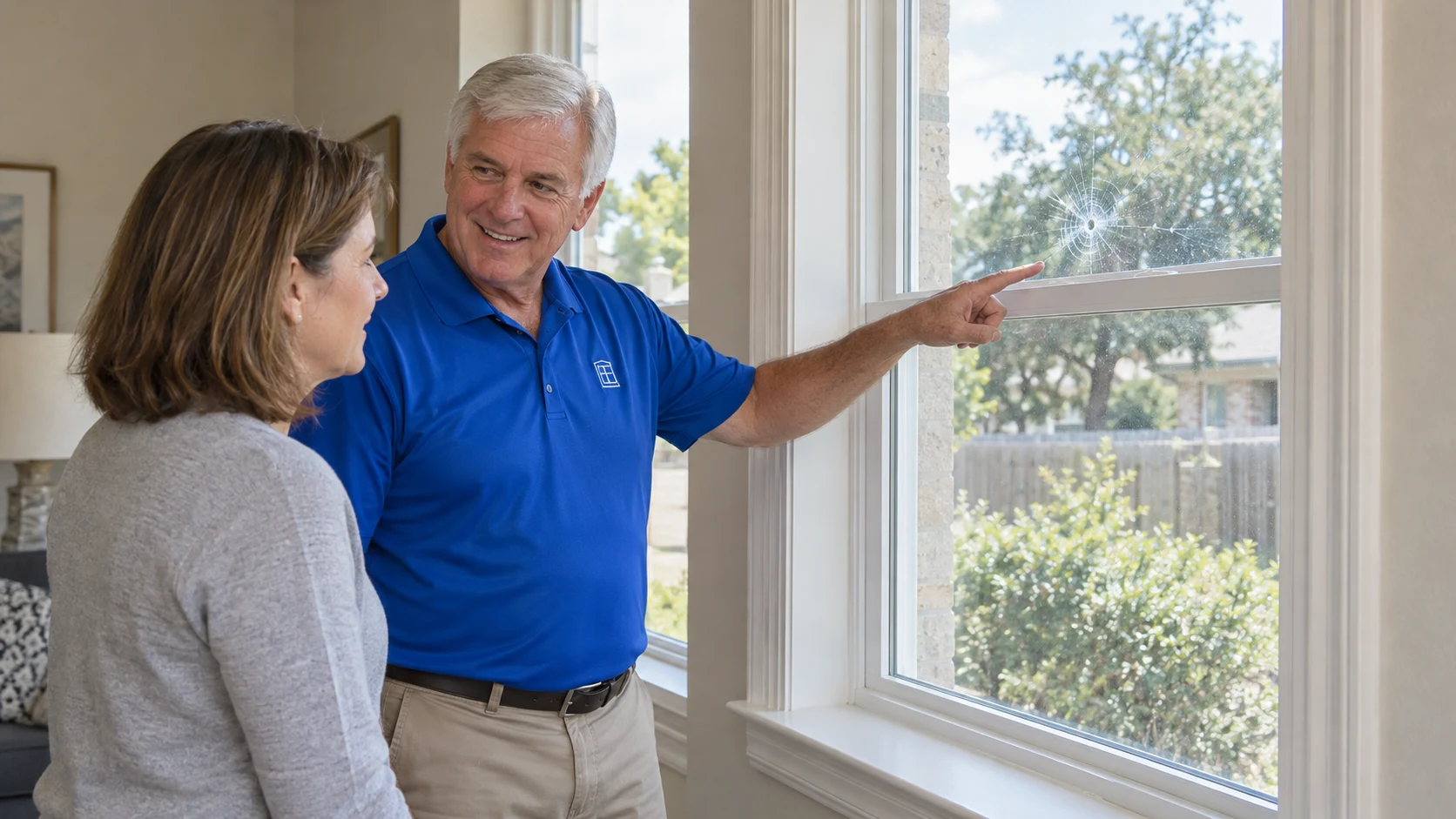
Can Hail Damage Your Windows? When to Consider Replacement
The storm has moved east, the sirens are quiet, and the house feels normal until morning light hits the breakfast room. A screen is shredded. One upper sash has a crescent-shaped crack. The front door still locks, but the weatherstrip looks twisted, and there is a damp mark near the threshold.
For North Texas homeowners, the first decision is who to call and what to leave alone. Storm-damaged windows and doors can involve safety, warranty service, temporary protection, replacement, or a larger problem with the roof, wall, drainage, or structure.
Clarity Windows and Doors can help homeowners evaluate window and door replacement needs, and Clarity provides eligible service support for products it installed. After hail or wind, document what happened, protect the home without risky steps, and decide who should look at what next.
Start With Documentation, Not Diagnosis
Before anyone tests locks, forces a sash, or pulls at trim, create a simple record of what you can see from safe locations. You are not trying to prove the cause of every mark. You are building a timeline and a photo set that helps the next professional understand what changed after the storm.
A useful storm file includes the date and approximate time of the storm, photos from the street and yard, close photos of damaged windows and doors, interior photos of water stains or flooring changes, and notes about operation problems. Texas Department of Insurance guidance tells homeowners to take pictures and video of the damage and keep damaged items until the insurance company says otherwise.
For windows, photograph cracked glass, dented screens, damaged grids, loose trim, bent locks, water on the sill, and any sash that no longer sits square in the frame. For doors, photograph the slab, frame, hinges, sill, sweep, weatherstrip, lockset area, and any daylight now visible around the opening. If water is present, photograph where it enters and where it traveled, then focus on limiting further damage through the right emergency or mitigation professional.
Take wide photos first so the opening is easy to identify later.
Take close photos from a safe standing position, without touching broken glass.
Save receipts for temporary protection, cleanup, or emergency mitigation.
Keep a short written list of changed operation, such as a door that drags or a window that will not lock.
Handle Safety Issues Before Product Decisions
A cracked pane and a little rain at the sill feel like window problems, but some storm conditions belong to emergency, mitigation, electrical, roofing, tree, or restoration professionals before a window and door consultation makes sense. The product decision can wait when the house is still taking on water or the opening is unsafe.
Do not touch cracked glass, push on a damaged sash, climb to inspect upper windows, or test a door that appears shifted by impact. If the opening has broken glass, active water intrusion, a tree limb pressing into the house, electrical risk, ceiling sagging, or a displaced-looking wall, keep people away and call the appropriate emergency professional. CDC guidance on cleaning safely after a disaster also stresses protective gear, caution around floodwater, and drying wet areas quickly when conditions are safe.
A window or door specialist can evaluate the opening once the immediate hazard is controlled. That order matters because water may be coming from the roof, brick, flashing, siding, or wall cavity instead of the unit itself. A new stain near a window after wind-driven rain deserves attention, but it does not automatically identify the product as the source.
Broken or loose glass: keep away and arrange appropriate glass or emergency protection help.
Active water intrusion: focus on stopping water and drying the area safely.
Roof, tree, or wall damage: call the trade that matches the hazard before evaluating the window or door.
Door will not close after impact: avoid forcing it if the frame, lock area, or wall appears shifted.
Separate Product Warranty From Property Insurance
After hail damages a window or wind damages an exterior door, homeowners often ask: is this covered? The better first split is between product warranty and property insurance, because those are different contracts with different rules and decision-makers.
A product warranty may apply to eligible products, parts, labor, glass, or service situations depending on the manufacturer warranty language and the installation history. Property insurance is handled through the homeowner and the insurance company. Clarity can provide warranty and service support for eligible Clarity-installed products, but Clarity does not decide insurance coverage and does not communicate directly with the insurance company.
That distinction keeps the process clean. If the product was purchased and installed through Clarity, gather your order information, photos, and a clear description of the concern before submitting a service request. If the issue appears storm-related, accidental, or tied to broader property damage, talk with your insurance company about the claim process while keeping the window or door evaluation focused on condition, fit, operation, and replacement need.
When Window Replacement Becomes the Sensible Evaluation
Some storm marks are cosmetic or isolated. Others point toward a window that no longer closes, locks, drains, seals, or protects the opening the way it should. Have the damaged opening evaluated before deciding between repair and replacement.
Clarity's public replacement FAQ is clear about scope: Clarity replaces the entire window unit, including the frame, glass, hardware, locks, and screens, rather than replacing only glass or repairing components on existing third-party windows. That matters after hail or wind because the visible cracked pane may not be the only issue. The sash, frame, lock alignment, screen track, exterior trim, or water management details may also need evaluation.
A replacement evaluation makes sense when glass is broken, the sash is bent or out of square, the lock will not align, the window no longer opens or closes normally, the frame is cracked, water staining appears at or below the unit, or multiple older windows show the same weakness after the storm. Replacement is also worth discussing when the damaged unit was already drafty, hard to operate, or near the end of its useful life before the storm arrived.
What Not to Assume From Fog or Water
Fog does not always mean a window needs replacement, and it does not always prove seal failure. Location matters. Condensation on the room-side glass, fog between panes, exterior morning moisture, and water near trim can point to different causes. After a storm, describe exactly where the moisture appears and whether it showed up before or after the weather event.
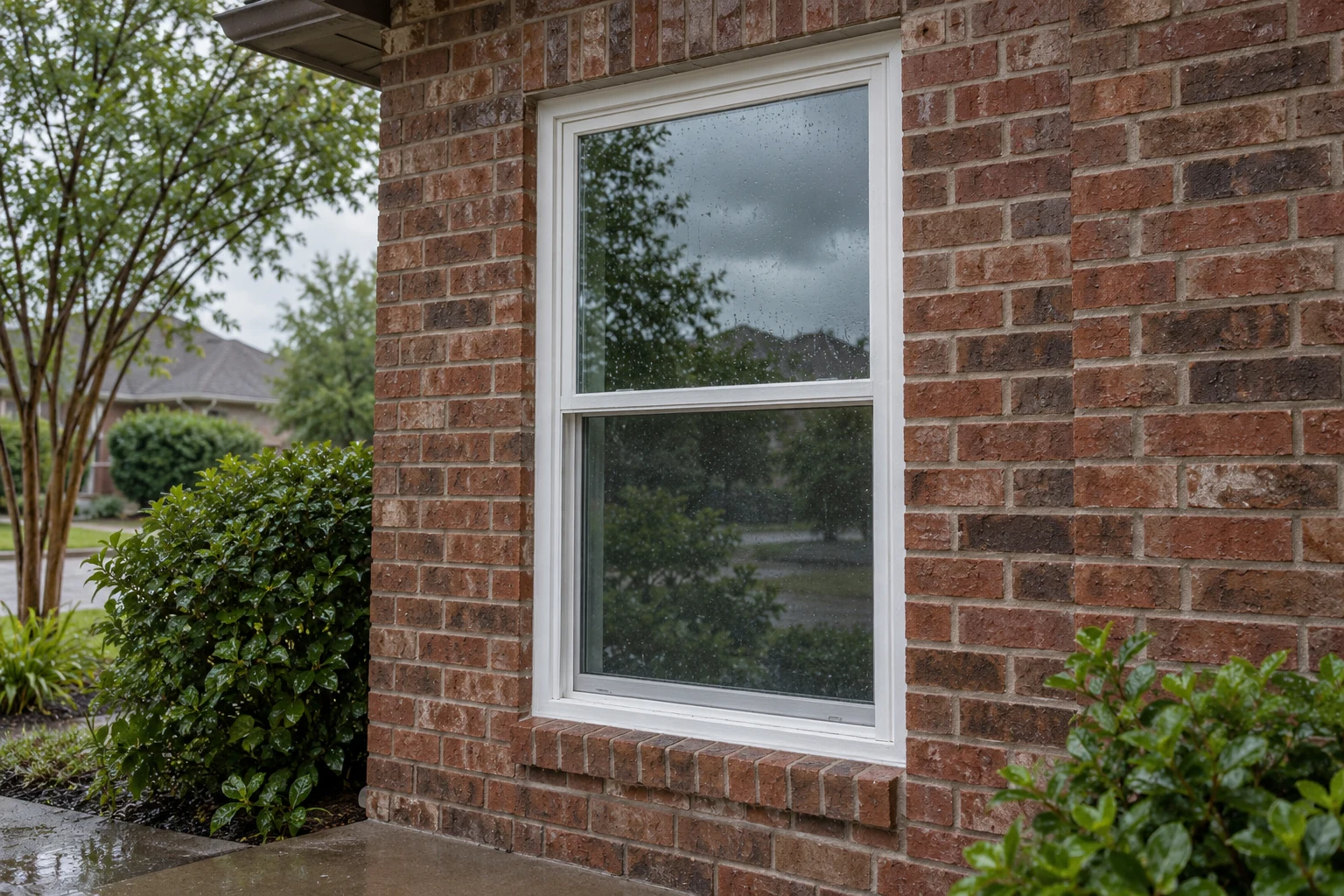
When a Storm-Damaged Door Needs a Closer Look
Doors tell their own storm story. A front door that worked yesterday but scrapes the threshold today may have taken wind pressure, debris impact, water swelling, hinge movement, or frame stress. A patio door that no longer glides may have track damage, debris in the sill, roller trouble, or a shifted panel.
For entry systems, look for daylight around the slab, torn weatherstrip, a lock that no longer throws cleanly, dents or cracking at the slab, loose trim, and new water at the threshold. If the damage is at the front of the home and the existing unit is worn, drafty, or no longer secure, an entry door evaluation can help determine whether replacement is the right long-term path.
For sliding or French patio doors, the signs are similar but often show up through operation. A panel that drags, rattles, will not latch, or lets water cross the sill should be evaluated without forcing the unit. Hail can damage screens and exterior surfaces, while wind-driven debris can affect glass, locks, and exposed trim.
What a Clarity Visit Can and Cannot Do
An evaluation should identify which openings need a replacement discussion, which products may qualify for warranty service, and which conditions another professional should review.
During a consultation, a Clarity design consultant can look at existing windows and doors, discuss replacement options that fit the home, and prepare an estimate when replacement is the right next step. The visit is not an emergency board-up call, a roofing inspection, a foundation diagnosis, a glass-only repair appointment, or insurance negotiation.
Preparation is simple: keep storm photos organized, note which openings changed after the storm, gather prior Clarity order information if available, and explain whether the problem is glass, frame, operation, water, or appearance. From there, the conversation can stay practical: service request, replacement estimate, or another trade first.
The Bottom Line
Storm damage is stressful because several problems can show up at once. Broken glass, torn screens, bent frames, difficult operation, water staining, and door alignment all deserve attention, but they do not all call for the same next step.
Document first. Keep people away from unsafe openings. Stop active water with the right professional help. Separate warranty questions from insurance questions. Then ask for a window and door evaluation when the opening itself may need service or replacement.
Get a Clear Next Step After the Storm
Once immediate hazards are addressed, request a consultation with Clarity Windows and Doors to discuss replacement options for your North Texas home. Bring Clarity to your home.
Helpful Resources
Frequently Asked Questions
Can Clarity repair a window that was installed by another company?
No. Clarity's public FAQ says the company does not repair or work on existing windows that were not purchased and installed by Clarity. For non-Clarity windows, Clarity evaluates complete replacement rather than glass-only or component repair.
Should I touch or test cracked glass after a storm?
No. Keep people away from cracked or loose glass and arrange the appropriate safety or glass professional. Take photos only from a safe position.
Does storm damage automatically qualify for warranty service?
No. Product warranty and property insurance are separate. Warranty eligibility depends on the product, installation history, warranty language, and specific issue. Insurance coverage is decided between the homeowner and insurer.
What photos should I take before requesting an evaluation?
Take wide photos of each affected opening, close photos of damaged glass, frames, screens, trim, locks, thresholds, and weatherstrip, plus interior photos of any water stains or flooring changes.
When is replacement worth discussing?
Replacement is worth discussing when the window or door no longer locks, closes, drains, or operates correctly, when glass or frames are damaged, when water appears around the unit, or when older products were already drafty or difficult before the storm.