Vinyl Window Replacement Near Me: Why Vinyl Works for North Texas Homes
A homeowner in Coppell can stand in a west-facing living room at 5 p.m. in August and know which windows are working against the house. The glass feels hot, the room never catches up with the thermostat, and the old frame may be swollen, chalky, corroded, or hard to lock. That is often when the search for vinyl window replacement near me becomes more than a casual comparison.
The material question matters in Dallas-Fort Worth because North Texas homes deal with long cooling seasons, strong sun, wind-driven rain, shifting soil, and wide temperature swings. Wood, metal, fiberglass, and vinyl can all have a place, but they do not ask the same things from the homeowner.
At Clarity Windows and Doors in Coppell, we look at replacement windows through a practical lens: how the window is built, how the glass package handles solar heat, how the unit is custom-made to fit the opening, and how the installation protects the home. Vinyl works here because a well-built vinyl window can reduce maintenance, support better thermal performance, and fit the way older DFW homes were actually framed.
Why Window Material Matters More in North Texas
In Dallas-Fort Worth, material performance shows up in comfort, cooling demand, upkeep, and how the window operates after years of sun exposure. The frame is not just trim around the glass. It is part of the thermal system, part of the water-management system, and part of the daily experience of opening, locking, and cleaning the window.
The U.S. Department of Energy notes that frame materials affect a window's overall energy properties, and that vinyl, wood, fiberglass, and some composite frames provide greater thermal resistance than metal. That matters here because a frame that readily conducts heat can work against the insulated glass package.
Maintenance is also a real decision. Wood can be beautiful, but exposed wood needs finish protection. Metal frames are strong and low maintenance, but unless designed with thermal breaks, they conduct heat quickly. Fiberglass can perform well, though availability, style options, and budget may push homeowners to compare it closely against premium vinyl.
For many home window replacement projects around Coppell, Carrollton, Irving, Plano, Frisco, Flower Mound, Grapevine, and the wider DFW area, vinyl gives homeowners a useful middle ground: lower upkeep than wood, better thermal behavior than basic metal, and custom sizing that works with real openings.
How Vinyl Compares With Wood, Metal, and Fiberglass
The best material is the one that solves the homeowner's actual problem. A 1990s brick home with failing aluminum windows does not need the same answer as a custom home with historic wood detailing.
Vinyl windows are made from PVC, and modern units include UV stabilizers that help the material stand up to sunlight. The Department of Energy also notes that vinyl frames do not require painting and have good moisture resistance. Those facts explain much of vinyl's appeal in North Texas, where exterior maintenance can become a cycle of scraping, sealing, repainting, and touching up weathered surfaces.
Vinyl: Low maintenance, moisture resistant, does not need painting, and can be built with insulated frame cavities depending on the product line.
Wood: Strong insulating qualities and a traditional look, but usually more finish work and ongoing maintenance.
Metal or aluminum: Strong and often low maintenance, but highly conductive unless the frame includes an effective thermal break.
Fiberglass: Stable and efficient, often with strong thermal performance, but it may not match vinyl on availability, cost, or style options for every project.
The Maintenance Difference
A homeowner who wants stained wood inside the house may accept the upkeep that comes with that choice. Many DFW homeowners, though, want a window that looks clean without adding exterior painting to the maintenance list. Vinyl is attractive because the frame color is part of the material, not a surface finish that must be renewed like painted wood.
The Fit Difference
Older homes in North Texas do not always have neat, standard-size openings. Framing may be out of square, brick openings may vary from window to window, and past repairs can leave surprises behind the trim. A custom-made vinyl replacement window can be built to fit the opening instead of forcing a standard unit into a space that needs extra carpentry.
Will Vinyl Replacement Windows Warp in Texas Heat?
This is one of the most reasonable questions a North Texas homeowner can ask. Summer heat is not theoretical here. Window frames sit through direct sun, hot wall cavities, sudden storms, and years of expansion and contraction.
The plain answer is that window quality matters. Low-grade vinyl, poor engineering, or bad installation can create problems in any climate. A well-built vinyl replacement window is different. Premium product lines use engineered vinyl extrusions, reinforced construction details, and glass systems designed for hot climates. Clarity's replacement window page describes Anlin Del Mar vinyl frames as built not to chip, peel, or warp, and Anlin identifies its Del Mar vinyl extrusion as engineered for strength, durability, and energy efficiency.
Installation also affects long-term performance. A window that is measured poorly, fastened incorrectly, or sealed without accounting for drainage and movement can bind, leak, or look wrong even if the product itself is sound. That is why searching for window installation near me should not end with a material choice alone.
With Clarity, the in-home estimate is meant to match the product to the house. The window should be custom-made to fit the opening, installed one opening at a time, and reviewed before the project is considered complete.
Where Energy Efficiency Really Comes From
Vinyl helps, but the frame is only one part of an energy efficient replacement window. A North Texas homeowner should look at the whole unit: frame material, insulated glass, low-e coating, gas fill, spacer system, operating style, and installation. If one part is weak, the rest of the window has to compensate.
ENERGY STAR criteria for residential windows are based on climate-specific performance ratings, including U-factor and Solar Heat Gain Coefficient. In plain English, U-factor relates to how readily heat transfers through the window, while SHGC relates to how much solar heat comes through the glass. In a cooling-heavy climate, solar heat control is a major part of comfort.
The Department of Energy also explains that low-e coatings can reduce energy loss and that spectrally selective coatings can filter a significant share of heat while still allowing daylight. For a DFW homeowner, that can mean a brighter room without the same hot-window feeling that comes from older clear glass.
Good replacement windows do not make every room feel identical. Orientation, shade, attic insulation, HVAC design, and air leaks elsewhere in the home still matter. But when an old window has weak glass, a conductive frame, worn weatherstripping, or poor fit, replacing the full unit can remove a major comfort problem from the room.
Terms Worth Knowing Before an Estimate
A homeowner does not need to memorize rating tables, but a few terms help during the estimate. U-factor, SHGC, low-e glass, insulated glass unit, argon gas, spacer, and air leakage all describe real performance details. If a salesperson only talks about the frame and never explains the glass package, the conversation is incomplete.
Custom Fit Matters in Older DFW Homes
Many homes across Dallas-Fort Worth have lived through foundation movement, remodels, window repairs, and changes in exterior materials. That does not mean the home has a serious problem. It does mean replacement windows should be measured and ordered for the actual openings, not chosen from a shelf and forced into place.
A custom-made vinyl window can help reduce unnecessary carpentry and preserve the look of the home. This is especially useful in brick homes, where a poor size match can create awkward trim, oversized caulk lines, or extra work around the masonry. The goal is a clean fit that gives the installer enough room to set, square, insulate, and seal the unit properly.
Custom fit also matters inside the home. Window treatments, stools, returns, tile, paint lines, and existing trim can all affect how finished the project feels. During an estimate, homeowners should expect the consultant to look at both sides of the opening and explain what will happen where the new unit meets the existing wall.
Clarity's FAQ notes that installation is performed by trained Clarity Craftsmen rather than random subcontractors, and that preparation can include moving furniture or removing window treatments when needed. Those details matter because the installation experience is part of the product.
What to Ask Before Choosing a Vinyl Window Company
The search results can make several companies look similar. The difference usually appears in the questions a homeowner asks before signing. Product, installation, service, and warranty all need to hold together.
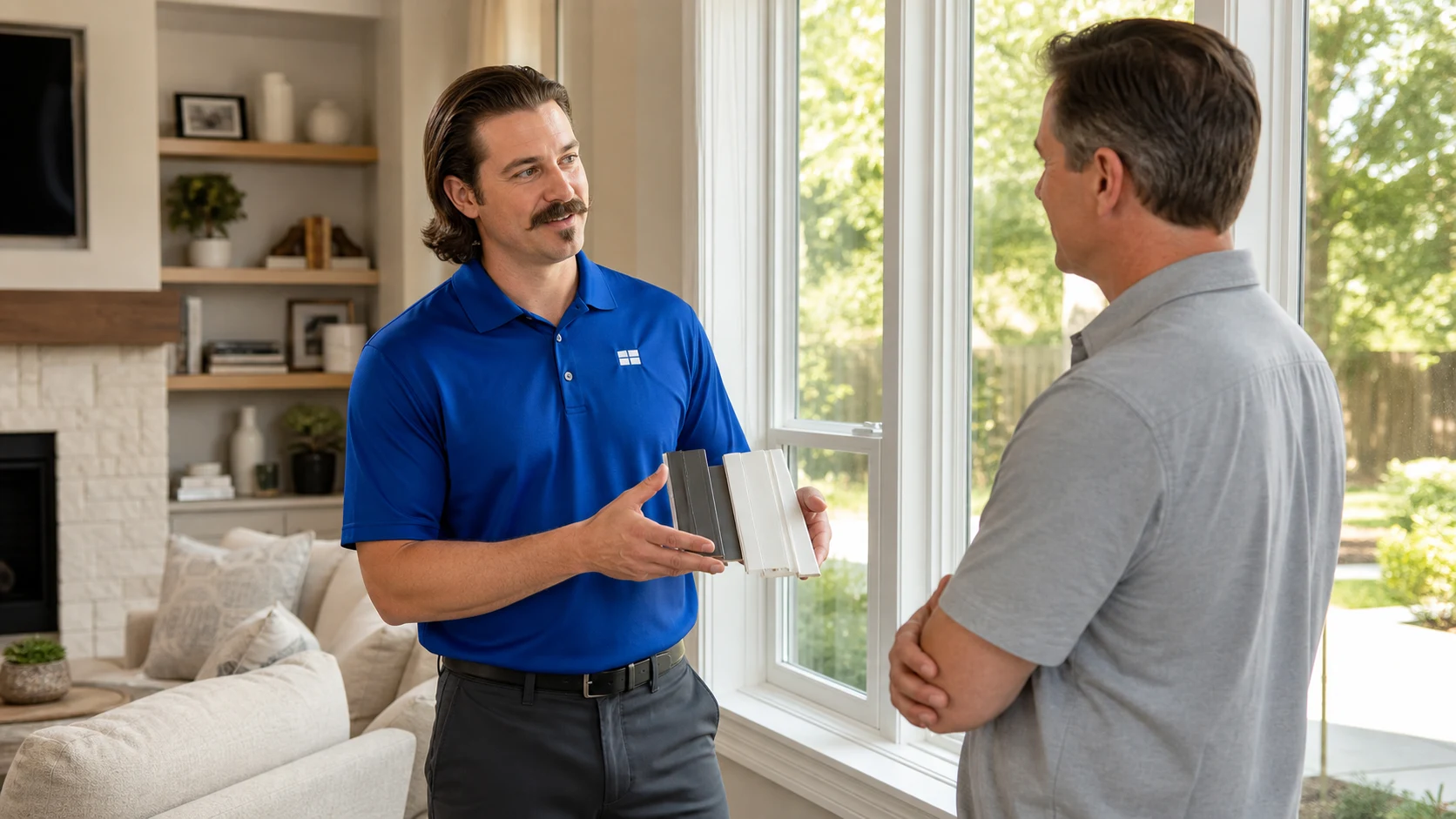
Start with the basics. Ask whether the company installs with its own trained crews or sends the work to subcontractors you have never met. Ask whether the windows are custom-made to fit the opening. Ask what glass package is being recommended for your home and why. Ask to see samples, not just photos, because frame construction, lock feel, screen quality, and glass options are easier to judge in person.
Also ask how the estimate is written. A useful estimate should make the scope clear enough that you know what is being replaced, which rooms are included, what product line is being used, and what options are selected. If the project may be phased by room or by elevation, ask how that affects product matching and future availability.
Warranty deserves its own conversation. Clarity's warranty page describes Anlin windows and doors as backed by a double lifetime warranty with covered parts, labor, shipping, and transferability to one subsequent homeowner, subject to the warranty terms. That coverage is worth understanding before the project begins.
Who performs the installation?
Are the windows custom-made to fit each opening?
Which glass package is recommended for west-facing or high-sun rooms?
Can I see window and door samples during the consultation or at the showroom?
What exactly is covered by the warranty, and how do service requests work?
Can the project be phased if I am not replacing every window at once?
When Vinyl Is the Right Call
Vinyl is often a strong fit when a homeowner wants lower maintenance, better comfort, custom sizing, and a cleaner installation path than many wood replacements require. It is especially practical for families who plan to stay in the home and want the windows to look good without repainting frames every few years.
It is also a good option when old metal windows are making rooms uncomfortable. Metal can conduct heat quickly, and older units may have weak glass, worn seals, and air leakage around the sash or frame. Replacing the whole window unit can address glass performance, frame performance, operation, locks, screens, and exterior finish.
Vinyl may not be the only answer for every home. A historic property, a strict architectural requirement, or a homeowner set on a specific interior wood look may call for a different conversation. But for many Dallas-Fort Worth homes, premium vinyl gives the right mix of energy performance, custom fit, warranty strength, and daily practicality.
The smartest next step is to compare real products and real installation details. Clarity's showroom at 800 Freeport Pkwy Suite #150 in Coppell is open to the public by appointment, so homeowners can see window options in person before making a decision.
Vinyl works for North Texas homes because it answers the problems homeowners actually feel: heat through old windows, frames that need too much upkeep, openings that are not standard, and uncertainty about who will stand behind the installation. The material matters, but the full window system and installation determine whether the project feels right years later.
If you are comparing vinyl, wood, metal, and fiberglass for a Dallas-Fort Worth home, start with the rooms that bother you most. Notice the sun exposure, the frame condition, how the window operates, and what maintenance you are trying to avoid. Then compare products with those details in mind.
Ready to Compare Replacement Windows?
Schedule an estimate with Clarity Windows and Doors or visit the Coppell showroom by appointment to see vinyl replacement window options in person. Bring Clarity to your home.
Helpful Resources
Frequently Asked Questions
Are vinyl windows better than wood windows in Texas?
Vinyl is often more practical for Texas homeowners who want lower maintenance and custom sizing. Wood can insulate well and has a traditional look, but it usually requires more finish work and ongoing care.
Do vinyl replacement windows warp in heat?
A well-built vinyl replacement window is engineered to handle sun exposure and temperature changes. Product quality and installation quality both matter, especially in North Texas heat.
Are vinyl windows energy efficient?
Vinyl frames can support good thermal performance, but energy efficiency also depends on the glass package, low-e coating, gas fill, spacer system, window style, and installation.
Can vinyl windows be custom made for older homes?
Yes. Premium vinyl replacement windows can be custom-made to fit the opening, which is helpful in older Dallas-Fort Worth homes where openings may not match standard sizes.
What maintenance do vinyl windows need?
Vinyl windows generally need simple cleaning and normal checks of tracks, weep holes, locks, screens, and weatherstripping. They do not need painting like traditional wood frames.
Should I visit a showroom before choosing windows?
It can help. Seeing samples in person makes it easier to compare frame profiles, locks, screens, glass options, and colors before scheduling or approving a full project.