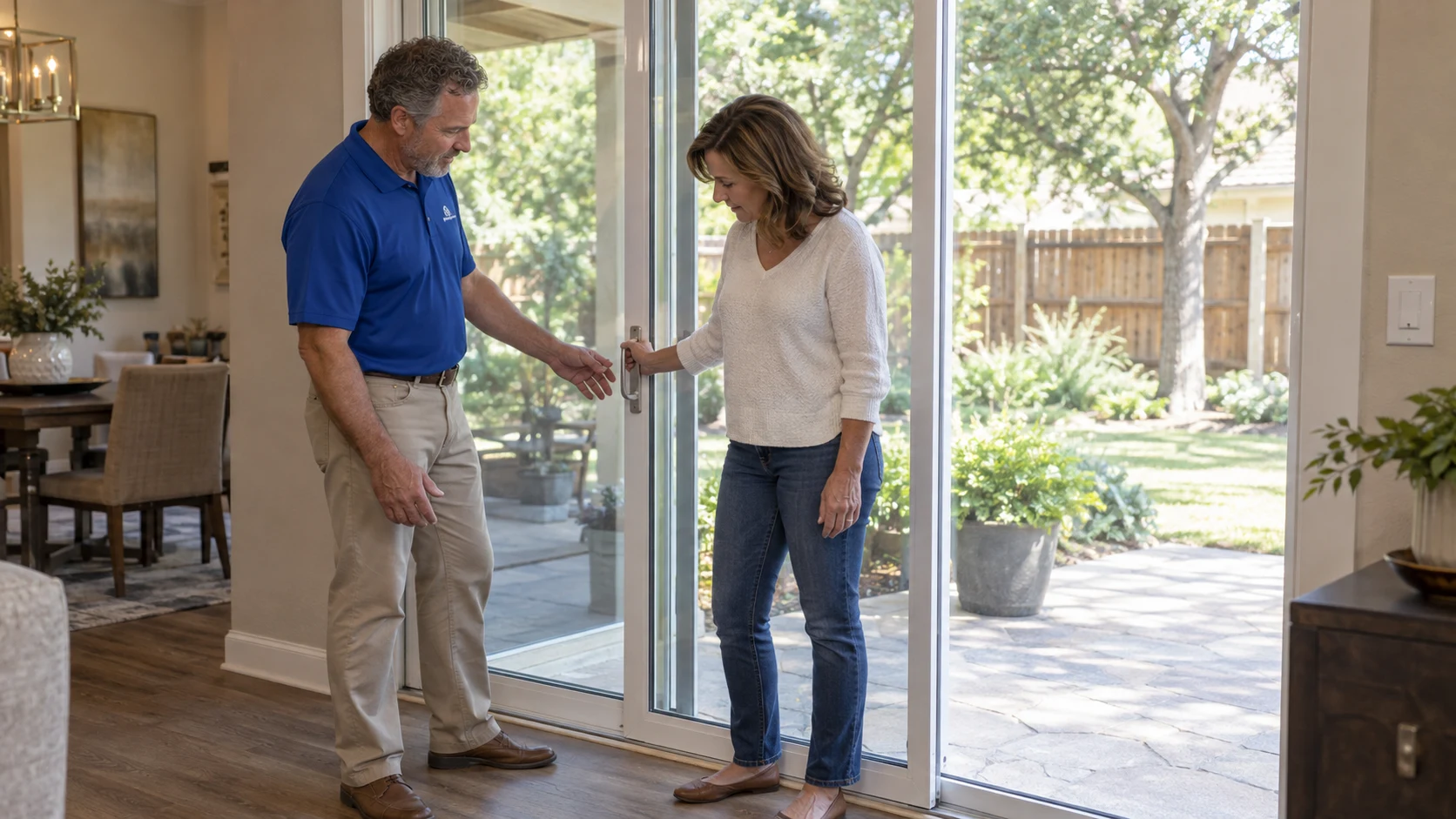
Why Is My Sliding Glass Door Hard to Open? Repair or Replace?
A patio door usually becomes a household problem slowly. First it drags on the way out to the grill. Then the lock takes a second try. After a few weeks, one person in the house knows the exact pull-and-shift motion, while everyone else avoids the door. A sticking sliding patio door can come from track debris, roller wear, adjustment, or frame/sill geometry. Blocked drainage, water damage, and between-pane fog are separate evidence that can affect the service or replacement decision.
Whether your patio door is in Lewisville or elsewhere in Dallas-Fort Worth, sort the evidence into four paths: simple care, qualified service, eligible warranty support, or replacement when wear, water trouble, and unreliable operation affect the full door.
Start With the Track, Sill, and Drainage
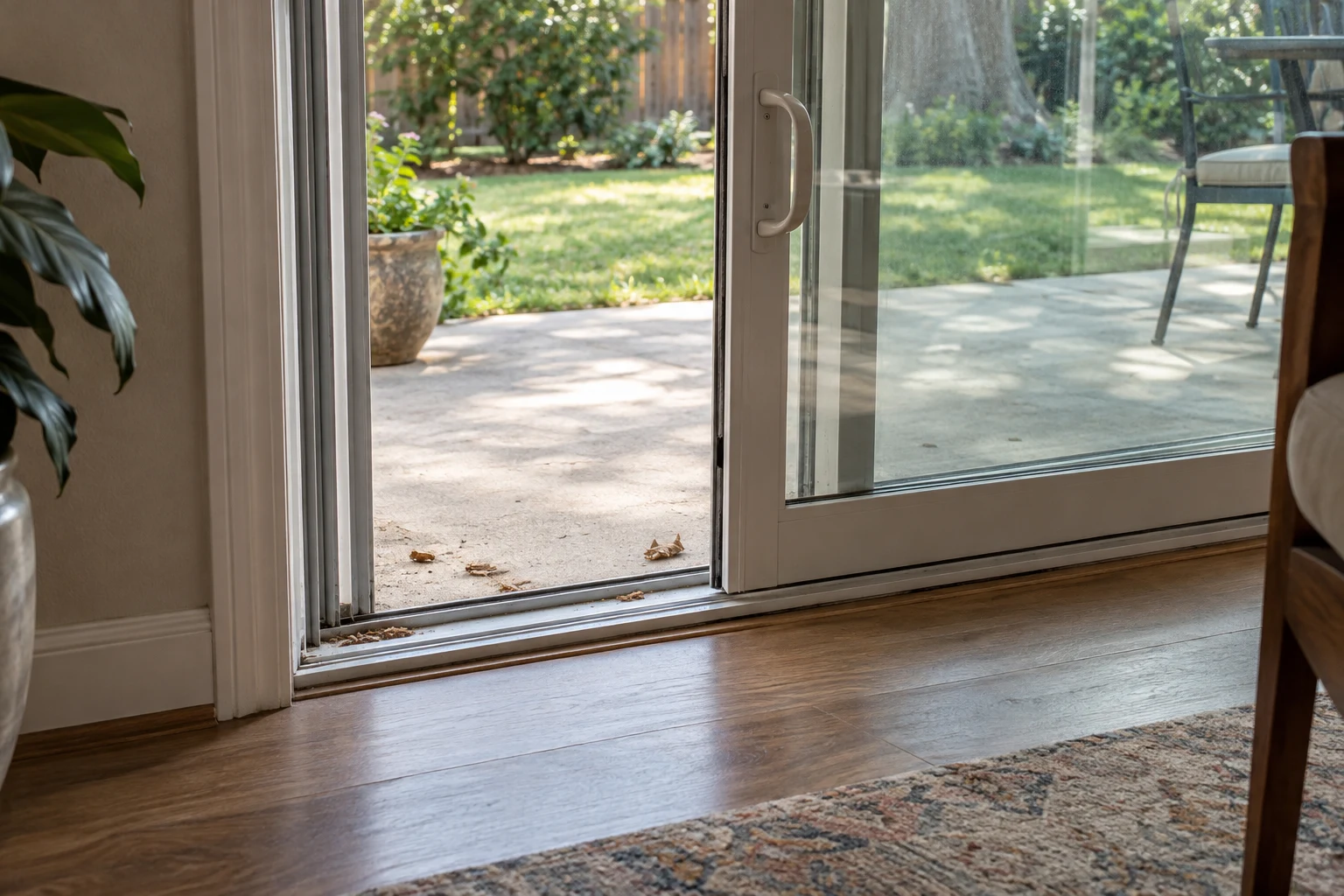
The safest first check is the bottom of the door. North Texas patios collect dust, pollen, grass clippings, leaves, and fine grit. Once that material packs into the track or sill, the panel can feel heavier even when the rollers and frame are still serviceable.
Clarity’s care and maintenance guidance recommends wiping dirt and debris from the sill and track areas with a damp towel and keeping exterior weep holes clear. Those small exterior openings help water drain outside as designed, so they should stay free of dirt, sand, stucco, and patio debris. A small soft brush can clear the openings when needed. Use 100% silicone only where the manufacturer directs lubrication.
A clean track can turn a stubborn panel back into an ordinary door. If the door moves better after careful cleaning, keep watching how it travels, locks, and drains over the next few uses. That small pause gives you cleaner evidence before anyone reaches for a bigger fix.
Wipe the track and sill with a damp towel.
Clear exterior weep holes with a small soft brush.
Use 100% silicone only where the manufacturer directs lubrication.
Stop if the panel feels unstable, the glass shifts, or the door must be forced.
When Rollers or Adjustment May Be Involved
If the track is clean and the door still grinds, bumps, or rides low, rollers or adjustment may be part of the issue. The panel may sit unevenly in the frame. The lock may miss its receiver. You may see a wider gap at one end than the other.
Clarity publishes manufacturer-specific roller guidance, but adjustment varies by door. Do not lift or remove the panel, force resistant hardware, or continue if the glass or panel feels unstable; use qualified service.
A heavy glass panel can turn a small service issue into broken hardware or damaged glass when someone keeps pulling harder.
Roller symptoms and opening geometry can look similar from inside the room. A low or uneven panel, repeated lock misalignment, or binding that returns after cleaning calls for evaluation of the complete opening. Qualified service should determine whether the door can return to reliable operation without forcing the panel.
Roller or adjustment clues include grinding, low panel height, uneven reveal, and lock misalignment.
Use manufacturer-specific guidance for the exact product.
Do not continue adjusting if hardware resists or the panel feels unsafe.
Use the Symptoms to Choose the Next Safe Step
A patio door can stick for one reason or for several overlapping reasons. Observe what is happening before treating one symptom as the full diagnosis. Do not diagnose foundation movement from one sticking door. North Texas soil movement can affect openings, but one difficult patio door is only one clue in a larger home pattern.
A failed insulated-glass seal may coexist with sticking but normally does not cause it. Between-pane fog matters because it can affect the service or replacement decision. A panel that drags needs its own review of the track, rollers, sill, frame, and opening. Clarity’s patio door replacement guide can help homeowners compare broader replacement questions after the immediate symptom is understood.
Keep water evidence separate from the sticking symptom. Water that remains in the exterior sill or drainage channel may be managed by the door's drainage path. Water crossing the interior threshold or reaching flooring, trim, or drywall needs prompt evaluation. Document where it stops and whether the weep openings are clear; do not assume roller wear caused the water.
Observation: gritty travel or visible debris. May indicate: dirt in the track or sill. Next safe step: wipe the track and sill with a damp towel and clear exterior weeps with a small soft brush.
Observation: uneven panel reveal or lock misalignment. May indicate: roller wear, product-specific adjustment needs, or panel position. Next safe step: stop forcing the door and use qualified service if the door is heavy, resistant, or unstable.
Observation: repeated binding or an out-of-square reveal after basic cleaning. May indicate: frame, sill, or opening geometry that needs evaluation. Next safe step: have the opening reviewed before making further adjustments.
Observation: water in the exterior channel versus water crossing the interior threshold. May indicate: normal drainage path in the exterior channel, or a more serious water-management problem if water enters the home. Next safe step: clear weeps and seek evaluation if water stands, crosses inside, stains flooring, or softens nearby materials.
Observation: fog, haze, or moisture between panes. May indicate: insulated-glass seal failure. Next safe step: document the condition and check whether service or replacement is the correct path.
Observation: multiple worn or unavailable components plus unreliable operation, locking, or sealing. May indicate: an aging door system near the end of practical service. Next safe step: compare repair feasibility with replacement.
Separate Maintenance, Warranty Service, Repair, and Replacement
Maintenance, warranty service, third-party repair, and replacement follow different paths. Mixing those paths can waste time, especially when the door was installed by one company, manufactured by another, or has parts that may no longer be easy to source.
Clarity provides replacement consultations and eligible warranty service. It is not a general third-party roller, track, or hardware repair shop. For a Clarity-sold Anlin door, submit a service request; eligibility and coverage depend on the product and written warranty terms.
If the door is an older third-party unit with one serviceable roller or hardware problem, an appropriate repair provider may be the right call. If operation, locking, sealing, drainage, and glass concerns are showing up together, evaluate the whole door instead of chasing one symptom at a time.
Before requesting service, identify who sold and installed the door and locate the product label, order record, or warranty paperwork. A Clarity-sold Anlin door belongs in Clarity's service-request path, subject to its written terms. A third-party door with an isolated roller or hardware problem belongs with an appropriate repair provider. Reserve replacement for concerns involving the complete unit or several systems together.
Maintenance path: safe cleaning, clear exterior weeps, and product-directed silicone use.
Warranty path: eligible covered products handled through the service request process.
Repair path: third-party hardware or roller work handled by a qualified repair provider.
Replacement path: a consultation when the complete door system no longer works reliably.
What to Compare if Replacement Is Under Consideration
If replacement is under consideration, compare fit, operation, drainage, locking, glass, screens, and daily use. A door that remains difficult for guests or family members to move or secure, lets water cross the interior threshold, or stays unreliable after qualified service may justify replacing the complete unit. Review Clarity's sliding and swinging patio-door options against the measured opening and the way the room connects to the patio. Sliding patio door replacement should address the combined operation and daily-use problems.
When a Consultation Makes Sense
A consultation makes sense when the door is no longer predictable. If one person can move it and another cannot, if the lock fails unless the panel is shifted by hand, or if you avoid the patio because the door is a fight, the opening is affecting how the home works.
During a Clarity consultation, a design consultant evaluates existing windows and doors, reviews custom options such as style, glass, color, and operation, and provides an exact, itemized price in writing. For a sticking patio door, bring the practical history: when the trouble started, what cleaning changed, whether the problem changes with weather, whether water reaches the interior, and whether fog appears between panes.
The Bottom Line
If replacement is the appropriate path, schedule a Clarity consultation to review the opening and receive an exact, itemized price in writing.
Schedule a Patio Door Consultation.
Clarity Windows and Doors helps Dallas-Fort Worth homeowners compare patio door options with a clear in-home consultation and written estimate. Request a Clarity consultation and bring Clarity to your home.
Helpful Resources
Frequently Asked Questions
Can I fix a sticking sliding patio door myself?
You can safely wipe the track and sill with a damp towel, clear exterior weeps with a small soft brush, and use 100% silicone only where the manufacturer directs it. Stop if the panel is unstable, hardware resists, or the lock will not secure.
Does a sticking patio door always need replacement?
No. Dirt, roller wear, product-specific adjustment needs, and drainage issues can make a door hard to move. Replacement becomes more reasonable when several problems appear together and the full door system no longer operates, locks, or seals reliably.
Can between-pane fog make a patio door stick?
A failed insulated-glass seal may coexist with sticking but normally does not cause it. Between-pane fog is separate evidence that can affect whether service or replacement makes sense.
Does Clarity repair old patio door rollers?
Clarity provides replacement consultations and eligible warranty service. It is not a general third-party roller, track, or hardware repair shop.
When should I stop using a sticking patio door?
Stop forcing the door if the panel or glass feels unstable, the door must be lifted to move, hardware resists, or the lock will not secure. Keep people clear and arrange qualified service.
What should I compare before replacing a patio door?
Compare fit, operation, drainage, locking, glass, screens, and daily use. The right choice should match the opening and make the room easier to use every day.