Why Does My Sliding Door Leak When It Rains?
After a hard North Texas rain, a patio door can make the whole room feel suspect. The exterior track looks wet. A corner of the floor feels cooler than the rest of the room. A faint water mark near the trim makes you wonder whether the door is failing, the storm was unusual, or surrounding conditions are sending water where it should not go.
Those clues matter, but one symptom is not a diagnosis. Condensation on glass, air leakage, managed sill drainage, and water reaching interior finishes each call for a different next step. For an Irving homeowner considering patio door replacement, the useful question is what the door, track, frame, glass, trim, and surrounding conditions are actually showing.
Separate the Symptom Before Naming the Problem
A patio door has moving panels, weatherstripping, glass, a sill system, and an opening in the wall working together. When comfort or moisture changes near that opening, the first job is to describe the symptom clearly.
This distinction keeps a simple maintenance issue from being overstated and keeps true interior water intrusion from being brushed off.
Condensation | Fog or beads on the room-side or exterior glass surface | May indicate humidity and temperature conditions, not necessarily door failure | Note the surface where it appears and whether it wipes away.
Noticeable air leakage | Air felt at the latch side, meeting rail, bottom sweep, or around trim | May point to patio door weatherstripping, panel fit, latch engagement, rough-opening air sealing, or age | Record where it is felt and whether the door closes and locks normally.
Managed water in the exterior sill or drainage channel | Water stays outside the interior finish line after rain | May be normal drainage behavior if the track and weep paths are clear | Keep sill and weep areas clean and watch whether water drains out.
Water crossing to interior flooring, trim, or drywall | Wet flooring, stained trim, damp drywall, or repeated interior wet lines | Needs prompt evaluation and should not be treated as normal track behavior | Document the location, timing, and storm direction, then have the door and surrounding area reviewed.
Where Air Can Enter Around a Patio Door
A drafty patio door usually has a pattern. Homeowners often notice it at the vertical meeting rail where sliding panels overlap, at the latch jamb, along the bottom track, or around the interior casing where the door frame meets the wall.
If the door no longer closes squarely, even good weatherstripping may not compress the way it should. Worn rollers can let a sliding panel sit low or uneven. A latch that only catches after you lift the handle is a useful clue because it says the panel and frame are not meeting cleanly.
Air can also bypass the visible parts. The Building Science Education resource on rough-opening air sealing explains that gaps between window or door units and framed openings can be major air-leakage sites when not sealed correctly. In a finished room, that leak may feel as if it is coming from the panel even when the larger issue is behind the trim.
Review the full door before deciding whether replacement is needed.
When a Damp Track Is Maintenance, and When It Is Not
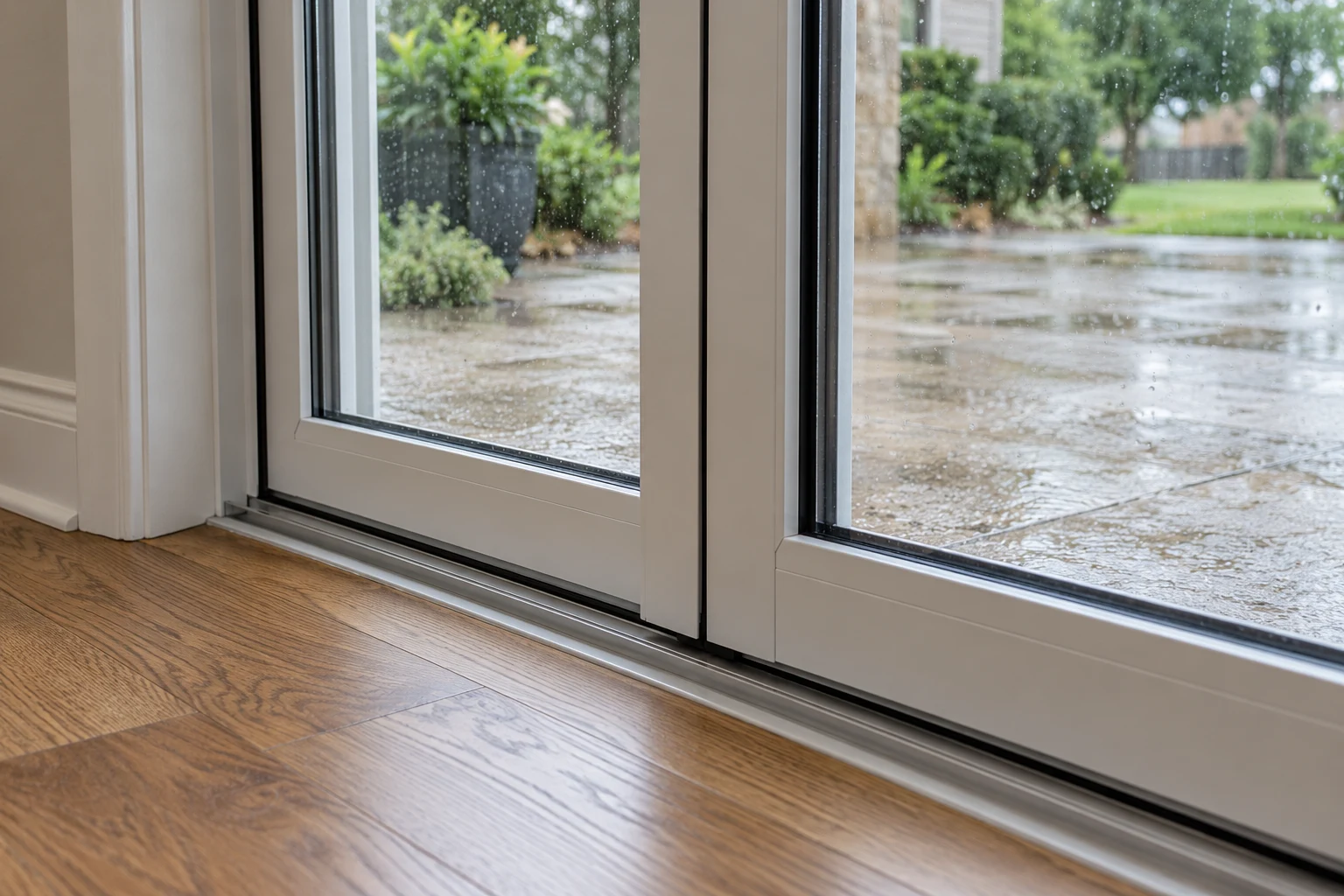
Sliding patio doors are built with sill and drainage details because wind can push rain against the glass and frame. Water confined to the exterior sill or drainage channel may be managed by the door system. Water reaching interior flooring, trim, carpet, or drywall is different and deserves prompt evaluation.
Track upkeep is still worth checking before replacement is discussed. Clarity’s care and maintenance guidance notes that windows and patio doors use exterior weep holes to help drain water outside. Use a damp towel to wipe dirt and debris from the sill and track, and keep the weep holes free of dirt, sand, stucco, and debris.
If you see water leaking under a sliding door only after heavy rain, take photos before cleaning anything. Photograph the track, the interior edge of the sill, the floor, and the outside patio or grade. Note wind direction, sprinkler use, and whether the door was locked.
If a clean track still sends water indoors, evaluate the door unit, sill, panel alignment, weatherstripping, installation, exterior drainage, and possible water paths above or beside the opening.
What Points to Failed Parts or Installation Trouble
Some signs move beyond ordinary upkeep. A panel that drags, rubs at the top, bounces over a damaged track, or leaves an uneven reveal around the frame may no longer be sitting square. Loose or flattened weatherstripping can leave a path for air. A worn sill or damaged track can affect drainage and operation.
Glass symptoms need careful wording. Moisture between panes can point to an insulated glass seal issue, while condensation on an interior or exterior glass surface often relates to humidity and temperature. Location matters, so a good review should identify where the moisture appears before anyone treats glass failure as the answer.
Installation concerns can be visible or hidden. The Building America Solution Center’s flashing and visible moisture clues explain that flashing helps direct water out of wall assemblies, and that visible stains, dampness, or trim deterioration can have several possible causes. If staining begins above the patio door, shows at both side jambs, or appears in nearby wall finishes, the door should not be blamed from that symptom alone.
Roof runoff, wall flashing, exterior cladding, patio slope, grading, drainage, foundation movement, and structural framing are outside a simple replacement decision. Those conditions need the appropriate qualified specialist before or alongside any door work.
What Replacement Can Actually Fix
Replacement is worth discussing when the door unit is the likely source of the complaint. That can include poor panel fit, failing patio door weatherstripping, damaged track or sill components, worn rollers, inefficient or failed glass, frame deterioration, or an older door that no longer closes and locks reliably.
A new patio door can improve operation, fit, glass performance, and how the unit is installed into the opening. Keep the discussion focused on the existing opening, visible conditions, and the configuration that fits the home.
Clarity’s patio door replacement options include sliding patio doors and swinging French door configurations, so the discussion can account for how the room opens to the backyard, swing clearance, and what style belongs with the home.
Replacement also gives the installer access to conditions that are normally covered by the existing frame and trim. If previous water exposure is visible once the old unit is removed, the project may need to pause for the right repair before the new door is set.
A new patio door should not be treated as a cure for roof leaks, wall-flashing failures, exterior drainage problems, grading that pushes water toward the house, or structural movement. If those causes are unclear, they should be diagnosed by the appropriate specialist first.
What a Clarity Consultant Can Review Before Discussing Replacement
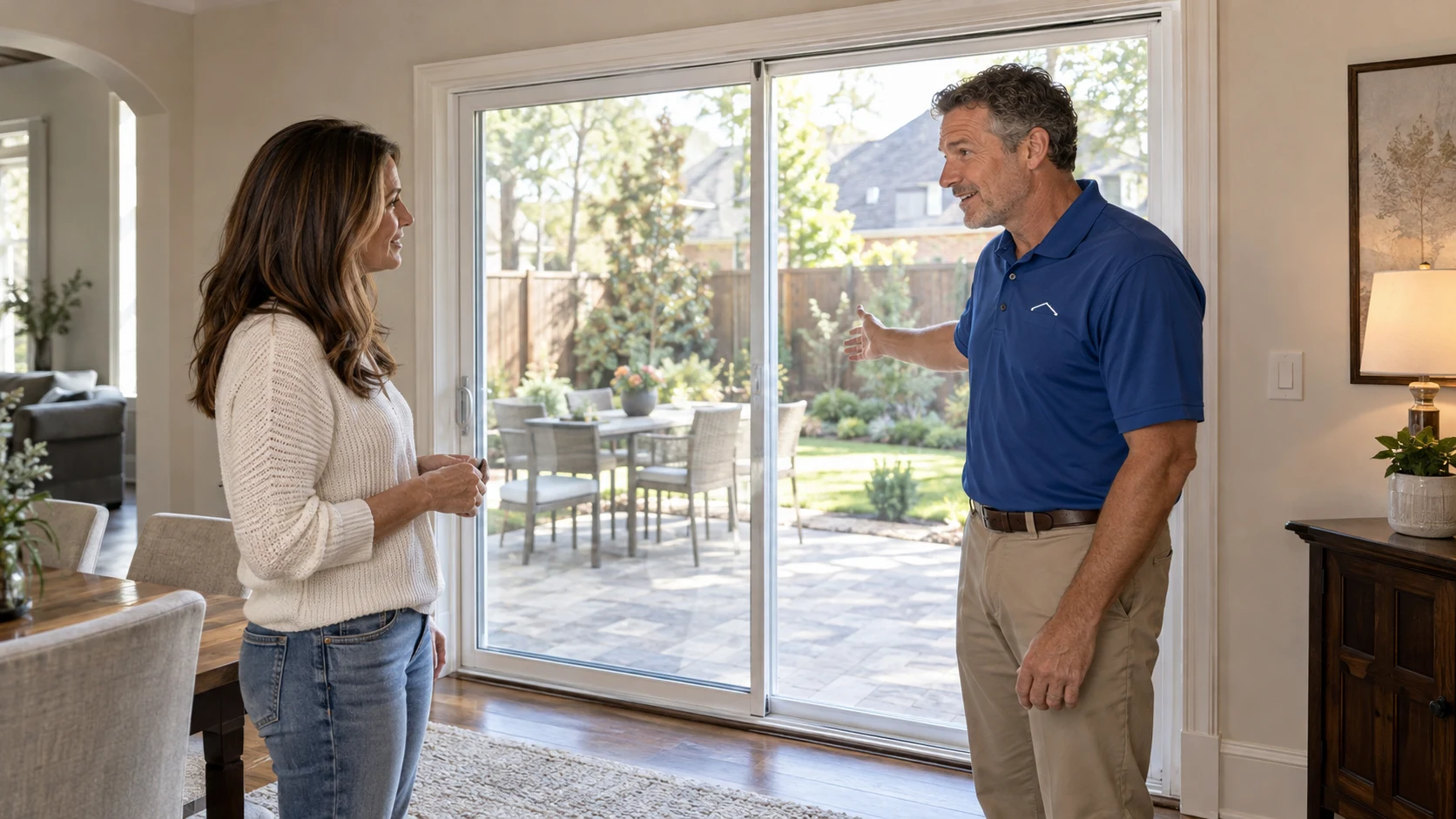
A Clarity design consultant can review the patio door and visible conditions, ask when the symptom appears, check how the door operates, look at weatherstripping and track condition, and talk through replacement options when the door appears to be the right scope.
For an air concern, that review may include how the panel closes, whether the lock engages cleanly, where the homeowner feels the draft, and whether the visible frame or trim suggests a fit issue. For a water concern, it may include where the water stops, whether interior finishes are affected, and whether exterior conditions appear to direct water toward the threshold.
Clarity provides replacement consultations and eligible warranty service for covered products; it is not a general third-party leak-repair firm. If the concern involves an existing covered product, the warranty path may be the right place to start. If the likely source is the roof, wall, flashing, drainage, grading, or structure, the appropriate specialist should diagnose that condition first.
When replacement fits, the written estimate should reflect the actual opening, the selected door style, and the visible conditions reviewed during the visit.
Helpful photos before the visit: the full door from inside, the track after rain, the exterior patio or grade, close-ups of staining, and a photo showing whether the door was locked when the symptom appeared.
Helpful notes: storm direction, time of day, sprinkler use, whether the HVAC was running, and whether the problem happens during rain, wind, heat, cold, or daily use.
The Bottom Line
Replacement is worth discussing when the door unit is the likely source; unclear surrounding causes should be evaluated by the appropriate specialist first.
Discuss Your Patio Door Replacement Options
A Clarity design consultant can review the patio door and visible conditions, explain replacement options, and provide a written estimate when replacement fits. If the source may be the roof, wall, flashing, drainage, grading, or structure, have the appropriate specialist diagnose it first.
Helpful Resources
Frequently Asked Questions
Is water in a sliding patio door track always a leak?
No. Water confined to the exterior sill or drainage channel may be managed drainage. Water reaching interior flooring, trim, carpet, or drywall is different and should be evaluated promptly.
Can patio door weatherstripping fix a draft?
It can help when the door is square, closes fully, and the weatherstripping is the weak point. If the panel is misaligned, the rollers are worn, or the rough opening is leaking air, weatherstripping alone may not solve it.
What can cause water leaking under a sliding door?
Possible causes include blocked weep paths, debris in the track, poor panel fit, damaged sill components, installation issues, exterior surfaces sloping toward the home, or water coming from the roof or wall above.
When does patio door replacement make sense?
Replacement makes sense when the door unit is likely responsible for poor operation, air leakage, failed glass, damaged track or sill components, frame deterioration, or repeated water concerns tied to the door system.