Which Type of Window Glass Is Best for North Texas Homes?
A west-facing bedroom in Plano can feel like a different house by 5 p.m. The blinds stay shut, the room still feels bright around the edges, and the glass seems to hold the heat long after the sun drops behind the fence. In another home, the problem may be a bathroom window that needs privacy, a dining room window that fades the floor, or a front room where traffic noise cuts through the quiet.
Choosing glass during window replacement should start with the room. Low-E glass, tinted glass, laminated glass, tempered safety glazing, privacy patterns, gas fills, and spacer systems all solve different problems. The right package for a sunny second-story bedroom may make little sense for a shaded breakfast nook.
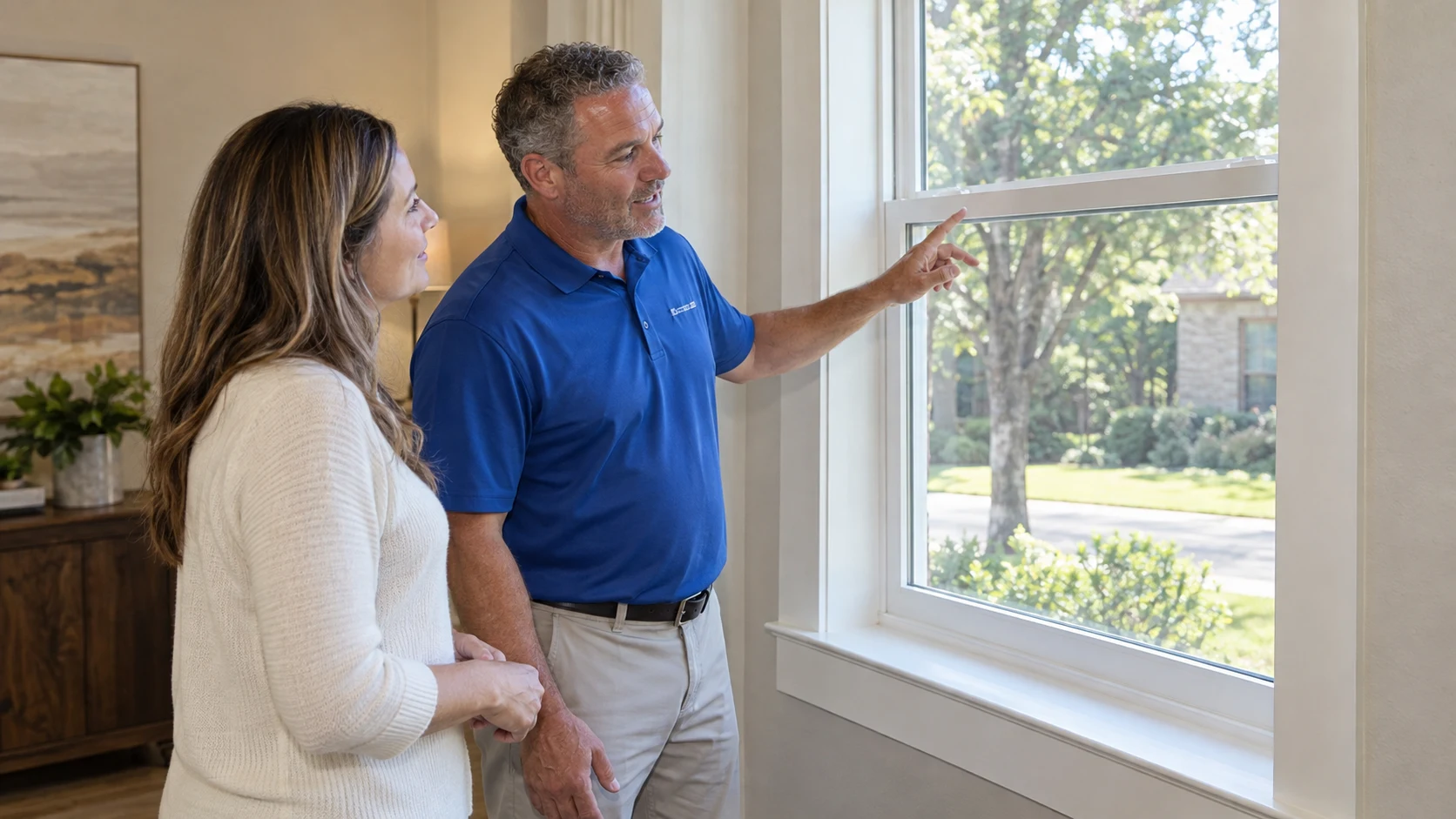
Clarity Windows and Doors helps homeowners across Dallas-Fort Worth compare these choices during the replacement window estimate, using the home's orientation, comfort issues, privacy needs, and written performance ratings as the guide.
Match Glass to Each Room
Choose each glass package around the room's exposure, use, daylight, privacy, and comfort needs. In North Texas, two windows on the same house can have different jobs. A west-facing game room may need stronger solar control. A north-facing office may need clear daylight. A bathroom window may need privacy without feeling closed off.
Before comparing product names, walk the home and note the problem at each opening. Is the room too hot in late afternoon? Does morning glare hit a desk or television? Are rugs or hardwood floors fading near a large window? Do you need privacy from a neighbor's second-story view? Does the room feel colder near the glass during a winter front?
That room-by-room list keeps the estimate useful and prevents one problem window from driving every glass decision in the house. Clarity reviews these choices as part of a full replacement window project, rather than as a loose glass-only repair.
Room or goal | Compare | Ask during the estimate
West-facing bedroom or game room | SHGC, glare control, visible light | Which package handles afternoon heat without making the room too dim?
Large living-room glass | VT, view, fading risk, solar gain | How will this option feel across several large openings?
Bathroom or street-facing bedroom | Privacy level, daylight, style | Should the solution be privacy glass, a different window style, or window coverings?
Glazing near doors, tubs, stairs, or walking surfaces | Safety-glazing requirements | Is a labeled safety-glazing product required for this exact opening?
Traffic, aircraft, or pool-equipment noise | Sound package, glass construction, expectations | What noise can this option reduce, and what will still depend on the rest of the home?
Know What Panes, Coatings, Gas Fills, and Spacers Do
Most replacement-window glass is an insulated unit: two or more panes create a sealed space; a Low-E coating reduces radiative heat transfer; argon or another approved gas fill slows heat movement between panes; and the edge spacer maintains separation while affecting edge-of-glass performance. These parts work as a system, so judge the proposed package by the certified whole-product rating for the exact product and configuration, not by a coating name or tabletop sample.
For winter comfort, compare Low-E glass windows by the certified U-factor for the complete product. In rooms that feel cold near the glass during a North Texas cold front, ask whether that value changes with the proposed window style, size, grids, or glass package.
Tint and Low-E Are Different Choices
Tint is visible coloration. It can reduce glare and some solar gain, and it also changes how the glass looks from inside and outside. Low-E is a thin engineered coating. Some glass packages combine tint and Low-E, so compare the SHGC and VT on the proposed unit before choosing from a sample.
Compare the Certified Whole-Product Ratings
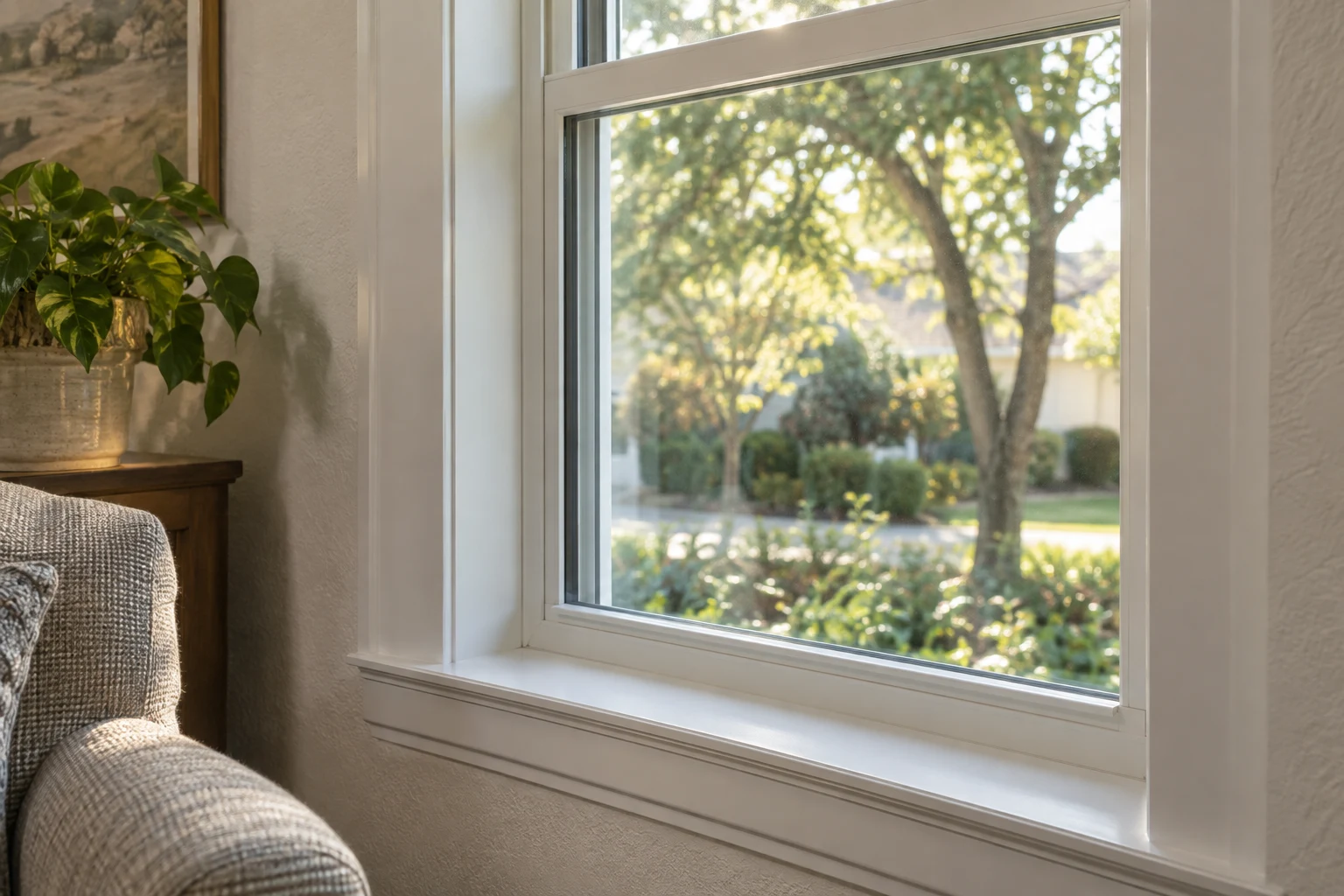
NFRC ratings describe whole-product performance under standardized laboratory conditions at NFRC standard sizes; they are not field measurements of the installed opening. Compare the certified listing for the proposed series, operator type, glass package, grids, and configuration. U-factor describes heat transfer, SHGC describes admitted solar heat, and VT describes visible light. Lower U-factor and SHGC and higher VT do not automatically form the right package for every room, so use Clarity's energy guide for the fuller explanation and confirm the exact proposed values in writing.
The National Fenestration Rating Council may also list Air Leakage and Condensation Resistance. Air Leakage describes air movement through the tested product; Condensation Resistance is a comparative rating, not a guarantee that condensation will never occur. Confirm which values apply to the exact proposed configuration.
Choose Solar Control by Exposure
A sunny DFW room needs glass that controls heat while keeping the space comfortable and usable. SHGC and VT help you balance solar control with daylight. For west-facing rooms, especially bedrooms, playrooms, and upstairs spaces, a lower SHGC usually matters more because afternoon sun arrives when the home is already warm. For south-facing glass, roof overhangs, tree cover, and seasonal sun angles can change the decision. For north-facing windows, daylight and view may carry more weight.
The Department of Energy notes that window choices vary by climate and depend mainly on U-factor and SHGC. In North Texas, use the room's orientation and shading when comparing those values.
Spectrally selective Low-E coatings can preserve visible light while limiting solar gain. In a west-facing room, compare SHGC and VT together when glare and afternoon heat are problems but the homeowner still wants daylight and a clear view.
Current Anlin Del Mar information lists Infinit-e as the standard high-performance glass package. Anlin lists SunMatrix as an optional package for warm to hot climates with high visible light, SunShield as an optional package for hot climates with a blue-gray anti-glare tint, and CoolShield and Luminance as other options for milder or colder goals. Current availability and NFRC values depend on series, operator type, size, grids, and configuration, so confirm the selected option and rating in the written estimate.
Daylight and View Matter Alongside Heat Control
Heat control is one goal. Many homeowners also want the room to stay bright and keep the outdoor view. VT helps with that decision because it tells you how much visible light passes through the whole window.
UV protection belongs in the fading conversation. UV is one contributor to fading. Visible light, heat, material sensitivity, and direct exposure also play a role, so residential glass cannot prevent all fading. If a dining room floor, piano, rug, or leather chair sits in a sun path, ask how the proposed glass package handles UV, SHGC, and VT together.
Samples are most useful when you view them with the room in mind. A glass package that looks only slightly different in a hand sample can change the feel of a large living room wall once it is installed across several openings. Clarity's Coppell showroom is open to the public by appointment, which gives homeowners a place to compare glass, window styles, colors, and hardware before ordering.
Handle Privacy, Safety, and Sound as Separate Decisions
Privacy glass and decorative glass solve related problems in different ways. Obscure patterns blur the view while still admitting daylight, which can work well for bathrooms, stair landings, or windows facing a close fence line. Decorative glass adds a design element and should fit the style of the home as well as the privacy need.
The adopted local code determines where safety glazing is required. For example, Coppell lists the 2024 International Codes as effective May 1, 2025, with local amendments; 2024 IRC Section R324 identifies hazardous glazing locations. Requirements depend on the opening's location, size, height, and relationship to doors, tubs, stairs, and walking surfaces, so confirm the exact opening and your city's adopted code before ordering. Use a labeled compliant safety-glazing product; tempered glass is common, and qualifying laminated products may also meet the requirement.
Laminated glass uses an interlayer that helps retain fragments when broken. Sound control is its own product decision. Anlin says its Sound Package uses dissimilar glass thicknesses to reduce outside noise, and results depend on the complete window, installation, walls, roof, doors, and type of noise.
What to Ask During Your Estimate
A clear estimate should connect each glass choice to the rooms where it belongs. You do not need to memorize every coating name. Use the written proposal to confirm each window, glass package, option, and current rating.
For every room receiving a different package, ask the proposal to identify the series, operator type, glass package, grids, and configuration tied to the quoted NFRC values. If a size or grid change alters the certified rating, have the revised value confirmed before ordering.
If an option is unavailable for a particular series, size, or operator type, ask the consultant to document the alternative package and its current ratings before you approve the order.
Which rooms are getting a different glass package, and why?
What are the U-factor, SHGC, and VT for the proposed configuration?
Will grids, size, or window style change the certified rating?
Is safety glazing required at any opening under the adopted local code?
Can I see the glass, finish, and hardware options before ordering?
The Bottom Line
Bring a room-by-room list to the estimate, compare certified package ratings with privacy, safety, daylight, and sound needs, and confirm the selected glass package and current NFRC values in writing. Bring Clarity to your home.
Choose Glass With a Clear Written Estimate
Schedule a window replacement estimate with Clarity Windows and Doors to compare glass options for your North Texas home, including Low-E packages, solar control, privacy glass, safety glazing, and room-by-room recommendations.
Helpful Resources
Frequently Asked Questions
Is tint the same as Low-E glass?
No. Tint is visible coloration that can reduce glare and some solar gain. Low-E is a thin coating engineered to reduce radiative heat transfer. Some packages combine tint and Low-E, so compare SHGC and VT for the proposed window.
Can privacy glass still let in daylight?
Yes. Many obscure or patterned glass options blur the view while still allowing useful daylight. The exact feel depends on the pattern, room size, window placement, and how much privacy you need.
Should I choose tempered or laminated glass?
Safety glazing may be required in hazardous locations under the adopted local code. Tempered and qualifying laminated products behave differently when broken, so use a labeled product approved for the exact location and confirm it before ordering.
Will replacement windows soundproof my room?
No residential replacement window should be described as soundproof. Sound packages can reduce certain outside noise, especially when tested assemblies use features such as dissimilar glass thicknesses, but results depend on the wall, roof, doors, installation, and type of noise.
Do I need the same glass package in every room?
Not always. A west-facing bedroom, shaded office, bathroom, and large living room window may need different priorities. Compare each room by heat, glare, daylight, privacy, safety requirements, noise, and view.