What Happens During a Free Window Consultation and Estimate?
The west-facing living room gets hot every afternoon, and the patio door takes a firm tug to open. You know what bothers you about the house. Before scheduling a consultation, you want to know what the visit involves and whether you will leave with a clear price.
That hesitation is common. Window and door replacement is a serious home decision, and most homeowners want to understand the scope before signing anything. Clarity Windows and Doors builds its free in-home consultation around the home itself: the openings, the way each room feels, the homeowner's priorities, and the options that fit the project.
Before the Visit, Start With the Rooms That Bother You
The consultation starts before a design consultant arrives. Clarity's estimate page asks homeowners to share a few project details so a consultant can follow up and schedule a visit that fits the home and the goals. The page also asks homeowners to set aside 60 to 90 minutes and to have at least one homeowner present during the appointment.
That time is useful because a good conversation needs more than a count of windows. If the breakfast nook gets harsh morning glare, the upstairs bedroom feels drafty, and the front door sticks after a rain, those are different problems. They may call for different products, priorities, or timing.
Before the appointment, walk through the rooms you want reviewed. You do not need exact measurements or technical language. Write down what you notice in daily life: heat, drafts, noise, condensation, hard-to-open sashes, damaged trim, water staining, privacy concerns, security concerns, or curb appeal goals. If an issue shows up only at certain times, such as glare in late afternoon or moisture after a storm, photos can help the consultant understand what you see.
Mark the windows or doors you want reviewed.
List the daily problems each opening creates.
Think about whether you want to discuss one room, several priorities, or the whole home.
Gather HOA notes, finish preferences, photos, or inspiration images if you already have them.
Decide who should be present so the visit can cover real project decisions.
Start With the Homeowner's Goals
When the consultant arrives, the first job is to understand why you are considering replacement. A room that overheats in August needs a different conversation than a bedroom facing road noise. An entry door project may start with security, weather protection, style, or all three. A patio door used by kids and pets all day has different demands than a formal door opened mostly for backyard access.
This is where a useful window replacement consultation should slow down. The consultant should ask how the home works day to day. Which rooms bother you most? Are you trying to match the existing look, change the exterior style, improve operation, reduce drafts, or plan the project in phases?
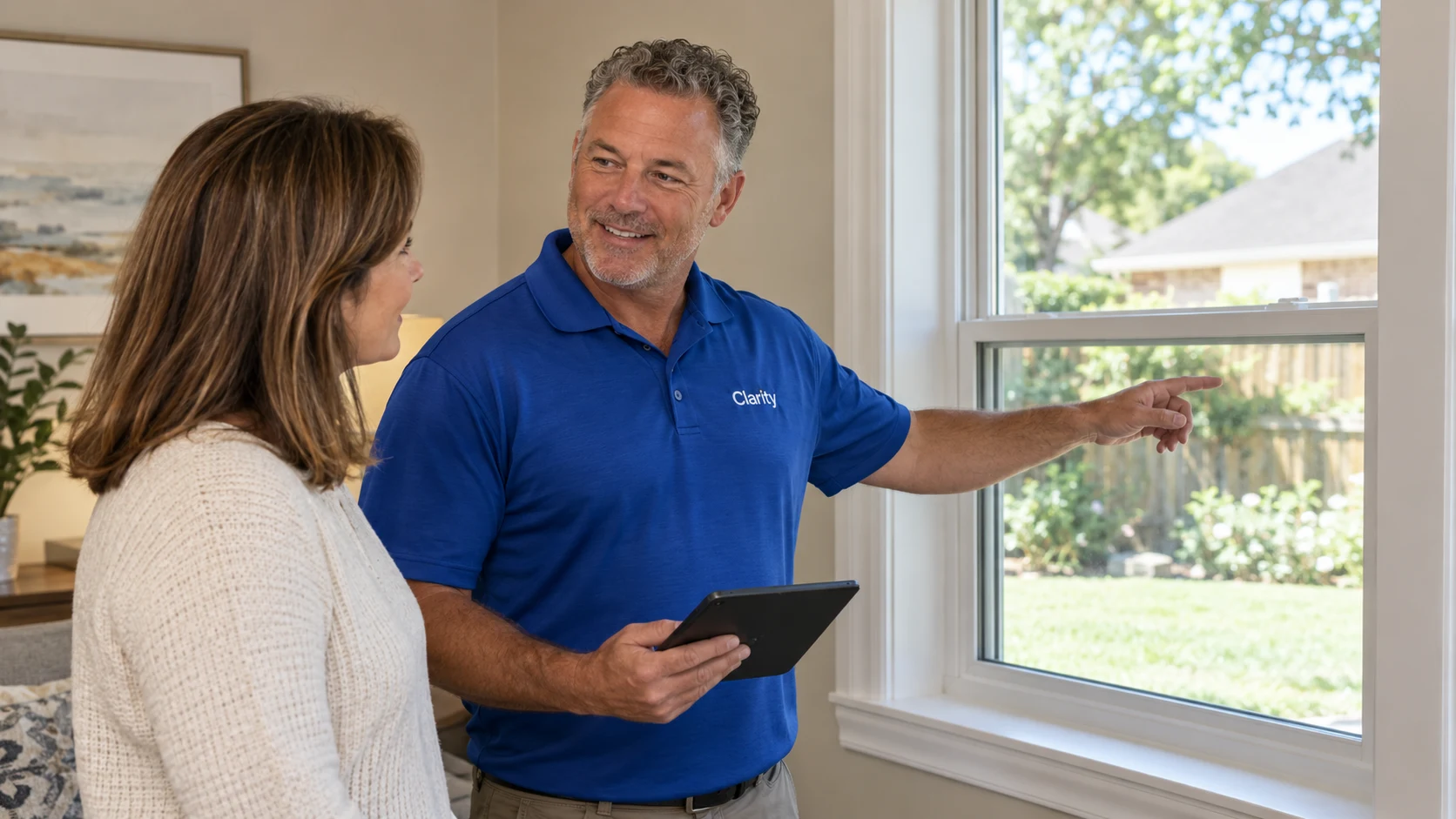
Clarity describes this first project step as a pressure-free in-home consultation. The design consultant gets to know your home and goals, walks through options side by side, and helps design the replacement solution that fits best. Homeowners who want to compare products in person can also visit the Coppell showroom by appointment.
What the Consultant Reviews in the Home
Clarity's consultation page says the design consultant will evaluate existing windows and doors, help explore custom options, and provide an exact, itemized price in writing. In the home, that means the consultant is looking at the actual openings and the way those openings affect comfort, use, and appearance.
For windows, the review may include the opening, operating style, glass needs, color, grids, screens, and the condition around the unit. A window over a kitchen sink may need a different operating style than a large living room picture window. A second-story window can raise access questions that a first-floor bedroom window does not. If trim is visibly damaged or soft, that condition belongs in the scope conversation.
If the visit includes replacement window options, the consultant can connect the room's problem to choices such as window style, glass, color, grids, screens, and operation. Energy performance can also come up in practical terms; Clarity's guide to energy-efficient window ratings is a helpful deeper resource for homeowners who want to understand U-factor, SHGC, and related terms without turning the estimate visit into a technical class.
Precision Measurements Come Later
During the consultation, the design consultant evaluates the existing windows and doors, reviews custom options, and provides an exact, itemized price in writing. Once the homeowner is ready to proceed, Clarity's separate precision-measure-and-production step sends a technician to take detailed, exact measurements before the order goes to the manufacturer.
How Options Get Compared
The option conversation should stay connected to the rooms you just walked. If a primary bedroom is too bright in the morning, glass and privacy may matter more than grids. If a patio door is hard to slide, operation belongs near the top of the list. If the front entry is part of a larger curb appeal project, style, finish, glass, and hardware need to be discussed together.
Clarity's consultation page says the design consultant talks through custom options including style, glass, color, and operation. Those choices affect both the look and the project scope. A different window style, black exterior color, decorative door glass, or a change from a sliding patio door to French doors can change what is being priced.
For homeowners comparing entry door options, the visit may cover swing direction, threshold condition, hardware, glass, privacy, finish, weather exposure, and how the door fits the home's exterior. A front door facing full afternoon sun creates a different design problem than a protected entry under a deep porch.
The useful part of the visit is separating what the home needs from what you simply like. A homeowner may love a certain finish but care more about controlling heat in a west-facing room. Another may want the front door to look better from the street and also solve weatherstripping or threshold concerns.
Questions to Ask About the Written Price
Clarity's public promise is straightforward: after reviewing the home and custom options, the design consultant provides an exact, itemized price in writing. That written number is what turns the visit from a conversation into something you can review.
Use the written estimate to check the scope you discussed. If you searched for a window quote because you wanted a real price, ask the consultant to explain any item you cannot connect to a product or part of the work.
Ask which openings are included. Ask whether any windows or doors you walked past were intentionally excluded. Ask which selected options are reflected in the written price, such as style, glass, color, grids, screens, hardware, or finish. Ask how the price would change if you phased the project, added an opening, removed an opening, or changed a product choice.
If financing matters, ask how to review the available options directly with Clarity. Do not assume terms from a general promotion or from another contractor's proposal. Homeowners who want a pricing-focused companion piece can read Clarity's replacement window estimate guide.
What Happens After You Review the Estimate
After the visit, you should have a clearer sense of the project: the openings being considered, the options that fit your goals, and the written price tied to that scope. From there, the next step depends on your comfort level and timing.
You may want to ask a follow-up question, adjust the scope, discuss it with another decision-maker in your household, or visit the showroom by appointment to see products in person. That is a normal part of making a home decision. The written estimate gives you a concrete scope to review and a reference for follow-up questions.
When a homeowner is ready to proceed, Clarity's process moves to precision measure and production, then professional installation, then lifetime customer care. The consultation is the first step. Its job is to help you understand the home, the options, and the price before the project moves forward.
The Bottom Line
Before scheduling, note the openings and questions you want to cover. Choose a 60-90-minute appointment when at least one homeowner can be present.
Schedule a Free In-Home Consultation
You can schedule a free in-home consultation to review your windows and doors with a Clarity design consultant, compare custom options, and receive an exact, itemized price in writing.
Helpful Resources
Frequently Asked Questions
How long should I set aside for Clarity's free consultation?
Clarity's estimate page asks homeowners to set aside 60 to 90 minutes and to have at least one homeowner present during the appointment.
Do I need exact measurements before the visit?
No. The consultant reviews the existing windows or doors during the visit. You can help by listing the rooms, problems, and priorities you want to discuss.
Will I receive a written estimate?
Yes. Clarity says the consultation includes an exact, itemized price in writing after your existing windows or doors and custom options are reviewed.
What should I prepare before the consultation?
Walk the home, note the openings you want reviewed, list comfort or operation problems, gather HOA notes or design ideas if you have them, and make sure at least one homeowner can be present.
Is the consultation only for windows?
No. The consultation can cover windows, patio doors, and entry doors, depending on the project you want reviewed.
Can I visit the showroom before deciding?
Yes. The showroom is open to the public by appointment for homeowners who want to see window and door products in person.