Casement vs. Double-Hung vs. Sliding Windows: Which Is Better?
A Carrollton homeowner plans to replace the kitchen window over the sink and expects the decision to be simple: same size, better glass, cleaner frame. Then the real question comes up. Should that opening stay double-hung, switch to a crank-out casement, or become a slider?
That choice changes how far you reach, where the screen sits, how much of the window opens, whether a sash swings into a walkway, and how easy the glass is to clean from inside the home.
For homeowners comparing casement vs double hung windows, there is no single winner for every Texas house. A west-facing dining room, a tight kitchen, and a bedroom may each call for a different operating style.
Start With How the Window Opens
Before comparing glass packages, colors, or grids, get the movement right. An operating style that fights the room will bother you every week, even if the window looks good on installation day.
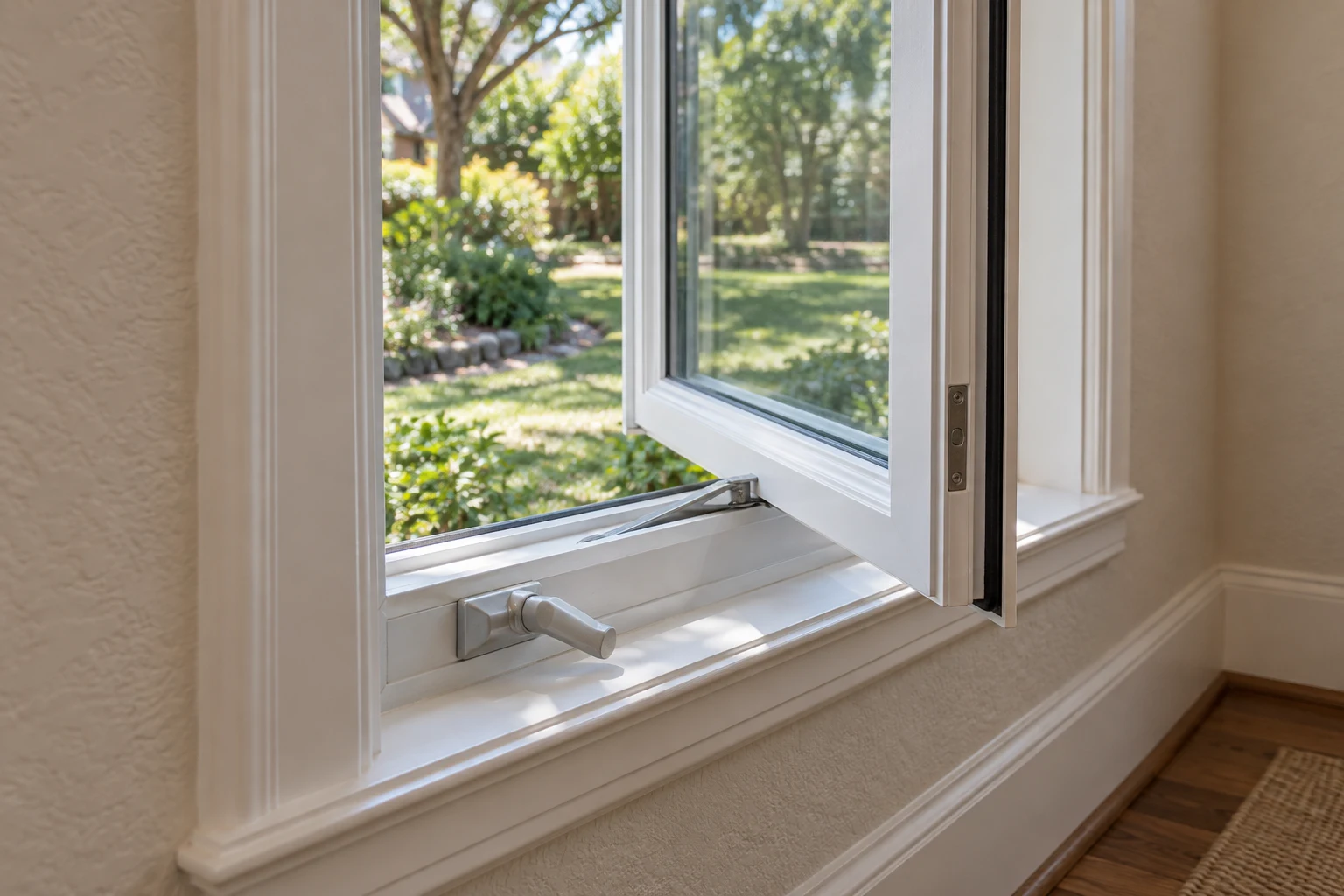
A casement window is hinged on one side and opens outward with a crank. Anlin describes casements as windows that offer a picture-window type view while still opening for air circulation, with side hinges and crank operation.
A double-hung window has two vertical sashes. Both the upper and lower sash can move, and Anlin notes that double-hung sashes can tilt in for cleaning from inside the home. The opening stays within the frame, so nothing swings toward shrubs, patios, or walkways.
A slider moves horizontally. On a single slider, one sash is fixed and one moves side to side. On a double slider, both sashes can glide left or right. Clarity’s replacement windows page lists single slider, double slider, casement, and double hung among the available Anlin Del Mar window styles, but the right configuration still has to be confirmed for the actual opening.
Choose casement when outward swing is acceptable and crank reach is helpful.
Choose double-hung when a traditional vertical look and indoor tilt-cleaning matter.
Choose slider when the opening is wider than it is tall or side-to-side operation fits the room.
Think About Screens and Fresh Air
North Texas homeowners often want ventilation in spring and fall, but screen placement changes the everyday feel of the window.
Casement windows usually place the screen on the inside because the sash opens outward. That can fit well over a sink or counter because the crank is easier to operate than lifting a sash at arm’s length. The tradeoff is exterior clearance: a casement needs room outside to open, so it may be a poor fit beside a tight side yard, dense landscaping, or a walkway.
Double-hung windows usually use an exterior screen, and because both sashes can open, you may be able to create airflow from the lower and upper portions of the opening when the specific unit and screen setup allow it. Still, the window does not become one fully open hole. The sashes overlap within the frame.
Sliders also keep movement in the plane of the wall. A single slider typically opens about half the unit, while a double slider can provide more flexibility from either side. When homeowners compare slider vs double hung windows, the room shape often decides the answer before the brochure does. A wide window over a bathtub, desk, or low cabinet may be easier to operate horizontally than vertically.
Match the Style to the Room, Not a Ranking
The best windows for Texas homes are not chosen by style name alone. Exposure, furniture, exterior clearance, cleaning access, and opening shape all matter.
For kitchens, reach is often the deciding factor. A crank-out casement can work well over a sink because you turn hardware near the bottom of the frame instead of pushing a sash up while leaning across the counter. A slider can also make sense over a long counter if the opening is wide and the homeowner prefers a side-to-side motion.
For bedrooms, do not assume a style name proves emergency escape compliance. A casement may open wide, a double-hung may be common, and a slider may fit the wall shape, but the actual clear opening size, sill height, hardware, and local rules have to be checked for the proposed unit.
For living rooms and dining rooms, the tension is often view versus operation. If the room already has a strong patio door or another source of ventilation, a fixed picture unit paired with an operating window may make more sense than trying to make every pane move. If the room needs fresh air from that wall, casement vs sliding windows becomes a practical question about outward clearance, opening width, and furniture placement.
If you want to compare real samples before choosing, Clarity’s Coppell showroom is open to the public by appointment. Seeing operation, screens, frame colors, and hardware in person can make a two-dimensional floor plan clearer.
Cleaning, Maintenance, and Daily Use
Cleaning access is one of the easiest details to overlook during selection and one of the first things homeowners notice later.
Double-hung windows can be appealing on second-story rooms because tilt-in sashes may allow exterior glass cleaning from inside the house. That feature should be confirmed for the specific proposed unit, not assumed from the words double-hung alone.
Casements can be easy to operate when the hardware is well placed, but the exterior face may require different cleaning access depending on size, location, and how far the sash opens. Sliders are familiar on wide horizontal openings, but their tracks need normal cleaning so dust and debris do not make operation feel rough.
This is also where full replacement matters. Clarity replaces the entire window unit, including the frame, glass, hardware, locks, screens, and related components; it does not replace glass only or repair non-Clarity windows. If your current window sticks, leaks air, or has damaged parts, the broader replacement-or-repair question may be worth reviewing before you focus only on style.
Energy Choices Still Depend on the Whole Unit
Operating style affects how you use the window, but energy performance comes from the whole unit: frame, glass package, spacer system, installation, orientation, shading, and size.
ENERGY STAR says certified windows, doors, and skylights are rated for climate-zone criteria, including U-factor and Solar Heat Gain Coefficient where applicable. That matters in Dallas-Fort Worth because a shaded north bedroom and a west-facing living room do not receive heat the same way.
Anlin’s Del Mar single slider page publishes NFRC-tested U-factor and SHGC values by glass package, and its brochure lists Del Mar, Del Mar Expanded, and Coronado options with different operating styles. Those numbers are useful, but they should be applied to the home rather than treated as a universal style ranking.
A casement, double-hung, or slider can be part of an energy-conscious replacement plan when the selected product fits the opening and exposure. The consultation should connect the style to the room: late-afternoon glare, furniture near the wall, a hard-to-reach latch, exterior obstacles, and how often you open that window.
A Simple Way to Narrow the Choice
If two styles both look good, walk through the room with the window open in your mind. Where does the sash go? Where is the screen? Can you reach the lock without moving a chair, leaning over a counter, or stepping into landscaping?
Casement may fit when you want a clear view, crank operation, and full outward swing clearance. Double-hung may fit when the home calls for a vertical traditional look, no exterior swing, and confirmed tilt-in cleaning. Slider may fit when the opening is wide, furniture sits below it, or a horizontal motion feels natural.
For a whole-home project, the right answer may be a mix. A kitchen casement, bedroom double-hung, and living room slider can belong in the same house when each one solves the room in front of it. That is the point of comparing casement vs double hung windows: finding the right fit opening by opening.
The Bottom Line
A window style should make the room easier to live in. In North Texas, that means thinking about sun exposure, how often you open the window, whether you can clean it safely, where the furniture sits, and what is outside the wall.
Clarity Windows and Doors can help compare the operating styles available for your actual openings, explain the tradeoffs in plain language, and build an estimate around the way your home works.
Compare Window Styles With Clarity
Schedule a free in-home consultation and written estimate with Clarity Windows and Doors. A design consultant can review your openings, talk through casement, double-hung, and slider options, and help you choose a replacement plan that fits your Dallas-Fort Worth home. Start here: https://claritywindows.com/get-quote/. Bring Clarity to your home.
Helpful Resources
Frequently Asked Questions
Are casement windows better than double-hung windows?
Not automatically. Casements can be helpful where crank operation and a clear view matter, while double-hung windows keep all movement inside the frame and may offer tilt-in cleaning when that feature is included. The better choice depends on the opening, room layout, and exterior clearance.
Are slider windows a good choice for Texas homes?
Slider windows can be a good fit for wide horizontal openings, rooms with furniture below the window, and areas where side-to-side operation feels easier than lifting a sash. Glass package, installation quality, and exposure still matter for comfort.
Which window style is easiest to clean?
A double-hung unit with confirmed tilt-in sashes can be convenient, especially above the first floor. Casement and slider cleaning depends on size, location, hardware, and safe access. Confirm the cleaning method for the exact unit before ordering.
Can I use a slider or double-hung window in a bedroom?
Possibly, but do not rely on the style name alone for emergency escape needs. The actual clear opening, sill height, hardware, and local requirements must be checked for the proposed unit.
Does Clarity replace only the glass if I like my current window style?
No. Clarity’s work is full window and door replacement, not glass-only replacement or repair of non-Clarity windows. The replacement discussion can still preserve a similar look if that is the best fit for the home.